
Why Reliable Power Infrastructure Matters More Than Ever in the Age of Edge AI
Over the past few years, much of the technology conversation has focused on artificial intelligence, edge computing, Industrial IoT, smart manufacturing, and embedded intelligence. These technologies are changing how machines collect information, process data, and respond to real-world conditions.
More decisions are now happening directly at the device level. Factory sensors can detect abnormal vibration before equipment fails. Smart cameras can analyze movement locally instead of sending every frame to the cloud. Industrial gateways can filter, process, and act on data before it ever reaches a remote server.
This shift reduces latency, improves response speed, and helps systems operate even when network connections are unstable. But behind this progress, one question is becoming harder to ignore:
What happens when power becomes unreliable?
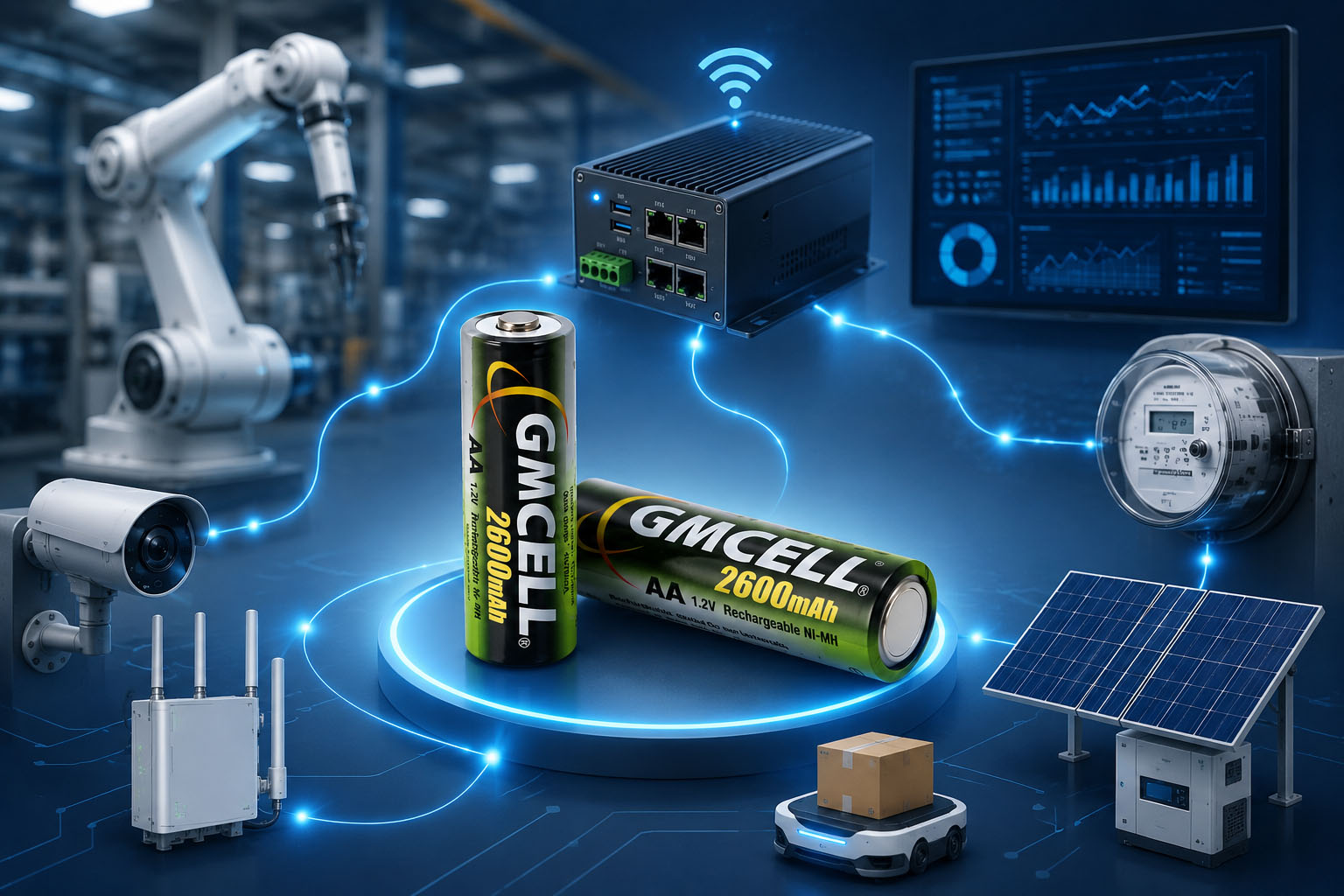
Intelligent devices may be able to operate without constant cloud access, but they cannot operate without stable energy. When power becomes inconsistent, local processing stops, data integrity is exposed, and even the most advanced system can fail at the source.
The Shift from Centralized Computing to Distributed Intelligence
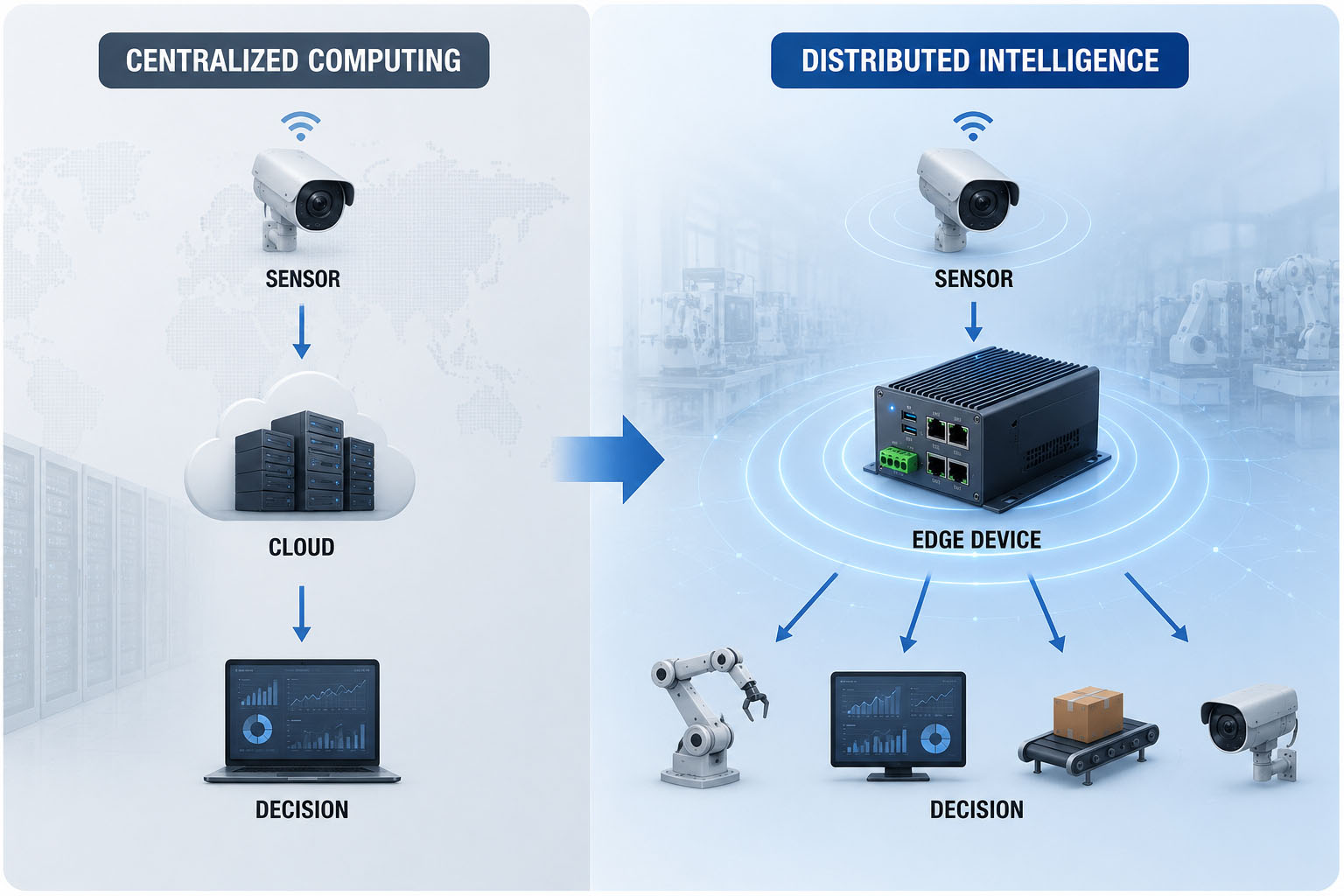
Not long ago, most digital systems followed a centralized model. Devices collected information, transmitted it to a remote server, and waited for instructions before taking action. This architecture worked well when bandwidth was inexpensive, latency was acceptable, and constant connectivity could be assumed.
Today, that assumption no longer holds true. As edge computing, embedded intelligence, and real-time automation become increasingly common, decisions are moving closer to where data is generated. Instead of sending every event to the cloud, devices are now capable of analyzing information locally and responding instantly.
Traditional Model
Sensor → Cloud → Decision
Modern Model
Sensor → Edge Device → Decision
This transition delivers significant advantages. Local processing reduces latency, lowers network dependency, improves response speed, and allows systems to continue functioning even when connectivity is interrupted. For industrial equipment, remote monitoring systems, smart cameras, and embedded controllers, these benefits can directly improve operational efficiency.
However, distributed intelligence introduces a new challenge. As more computing takes place directly inside devices, responsibility for system reliability also shifts to the device itself. Processing can move away from the cloud, but power cannot. The closer intelligence moves to the edge, the more critical dependable energy becomes.
Why Reliability Has Become More Important Than Performance
For many years, technology purchasing decisions were largely driven by performance metrics. Faster processors, larger storage capacity, and higher energy capacity often dominated engineering discussions. More capability was generally viewed as the primary objective.
Today, the conversation is changing. As intelligent devices become deeply integrated into industrial operations, infrastructure monitoring, logistics networks, and autonomous systems, reliability has become a far more valuable metric than peak performance.
Yesterday’s Priorities:
Capacity • Processing Power • Peak Performance
Today’s Priorities:
System Uptime • Power Continuity • Operational Stability • Long Service Life
Consider a remote industrial sensor installed on a pipeline, utility network, or environmental monitoring station. The goal is not to achieve the highest possible energy capacity on day one. The real objective is ensuring that the device continues operating reliably for years with minimal maintenance.
In these environments, battery reliability becomes more important than headline specifications. Engineers often prioritize predictable voltage behavior, low self-discharge, environmental stability, and long-term consistency over short-term performance gains.
Ultimately, organizations are investing less in maximum output and more in dependable operation. Whether supporting industrial automation, embedded electronics, or distributed computing infrastructure, reliable power is increasingly measured by how effectively it protects system uptime, maintains power continuity, and delivers a predictable long service life.
Industrial Automation Has Zero Tolerance for Downtime
In industrial automation, reliability is not just a technical preference. It is directly connected to production output, worker safety, equipment protection, and long-term operating cost. When a factory line, remote sensor network, or control cabinet loses power unexpectedly, the impact is rarely limited to one device.
A short interruption can affect PLC logic, industrial control systems, production records, calibration data, alarm history, and communication between machines. In many plants, the real cost of downtime is not only the lost production time, but also the time required to inspect equipment, recover data, restart systems, and confirm that the process is safe to resume.
This is why power design has become a serious part of modern IIoT planning. Industrial sensors may be small, but they often collect data that maintenance teams depend on for predictive analysis, safety monitoring, and process optimization. If those devices lose power too often, the entire data chain becomes less trustworthy.
For many backup power and memory retention applications, NiMH rechargeable batteries continue to provide a practical balance between reliability, safety, and predictable discharge behavior. In industrial environments, that predictability can matter more than a larger headline capacity number.
The Hidden Power Challenge Inside Embedded Systems
Embedded systems are becoming more capable every year. Small devices can now monitor conditions, process signals, run local algorithms, and communicate with other machines without depending entirely on cloud infrastructure. This is especially important as edge AI, TinyML, and local machine learning move into practical field applications.
But stronger processors do not remove the power challenge. In many cases, they make it more complex. A device may spend most of its time in a low-power sleep mode, then suddenly wake up to collect data, transmit a signal, run inference, or respond to an event. That intermittent behavior creates power demands that are not always visible from average consumption numbers alone.
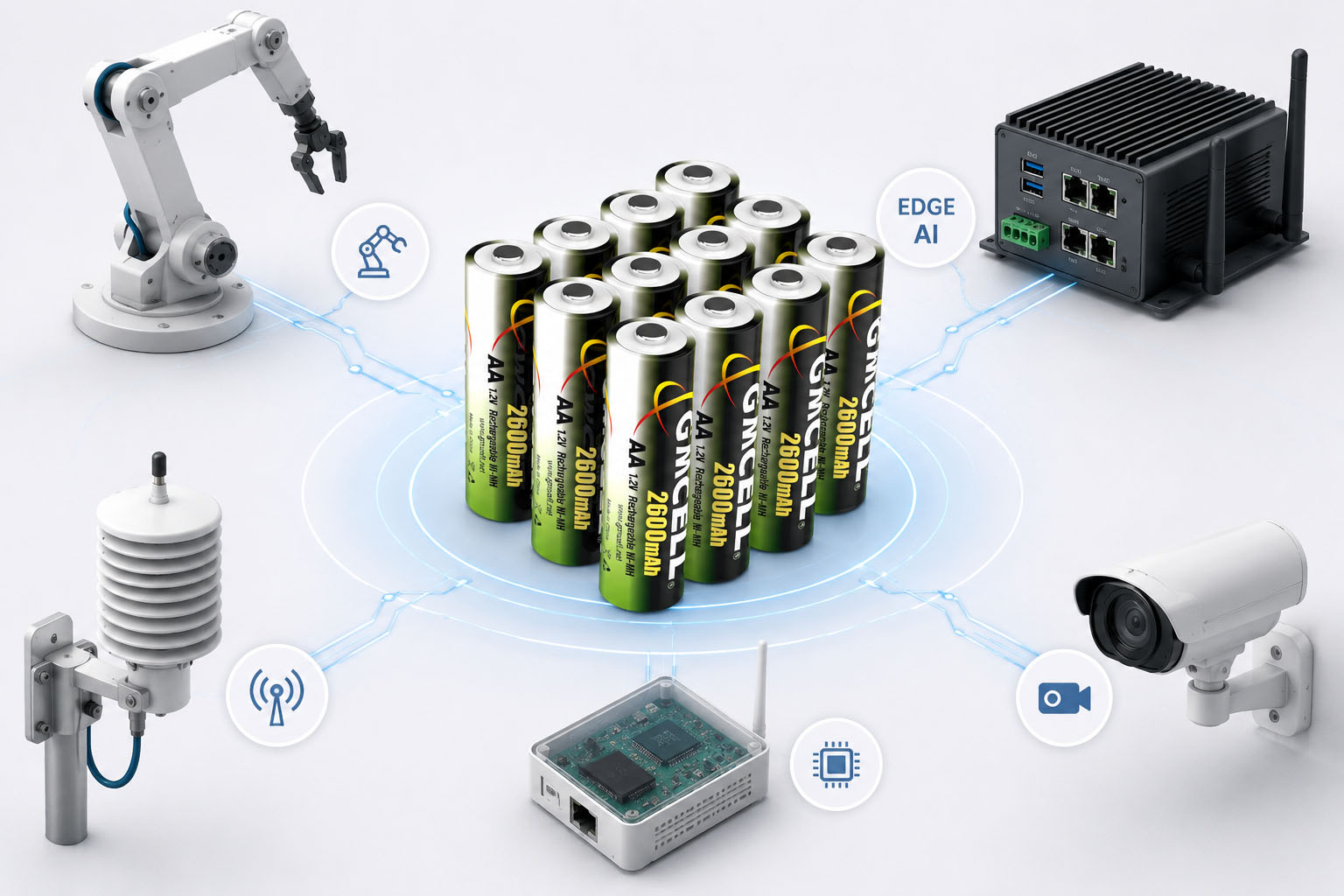
For engineers working with embedded electronics, the question is no longer only how much energy a device can store. The more important question is whether the power system can support real operating patterns over time: standby periods, communication spikes, sensor activity, temperature changes, and local processing loads.
This is why reliable energy storage is becoming part of embedded computing architecture. When intelligence moves into the device, power stability must move with it. A system can only sense, analyze, and respond locally when its energy source remains stable enough to support that intelligence in the real world.
Why Power Infrastructure Is Becoming Part of System Design
In the past, energy storage was often treated as a purchasing decision. Once the device architecture was nearly complete, teams would choose a battery based on size, cost, and available capacity. That approach may have worked for simple electronics, but it is becoming less suitable for modern industrial automation, embedded systems, and distributed computing environments.
Today, power is part of system architecture. Engineers must consider how long the device needs to run, how often maintenance can realistically happen, what temperatures it will face, and how much risk exists if the device fails in the field. These questions affect not only the battery, but also the entire product design.

A device installed inside a factory cabinet has different power requirements from a sensor placed outdoors, a logistics tracker moving across regions, or a remote monitoring unit deployed where service visits are expensive. In each case, runtime, maintenance cycles, temperature performance, and deployment risk become design variables.
Reliable energy storage is no longer an accessory. It is part of the infrastructure.
Building Reliable Power Solutions for Modern Devices
As more devices are deployed across industrial automation, embedded electronics, remote monitoring, and smart infrastructure, manufacturers are rethinking how energy storage should be selected and integrated. The goal is no longer simply to power a product. The goal is to help the product operate reliably throughout its real service life.
This is where manufacturing experience matters. A reliable power solution must match the device environment, operating pattern, installation method, safety requirements, and maintenance strategy. For industrial and embedded products, small design choices can affect field stability for years.
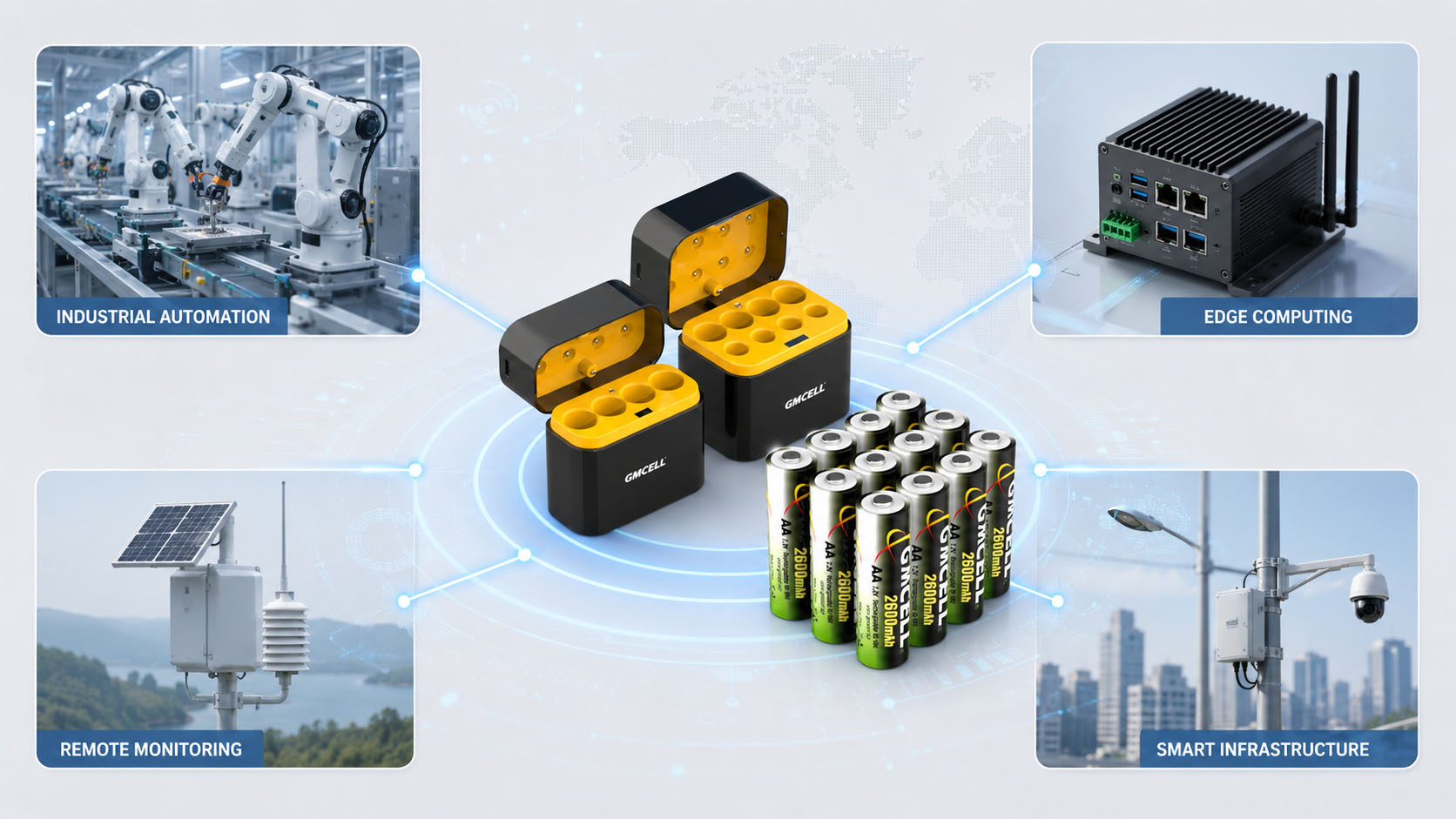
GMCELL supports this shift by focusing on battery manufacturing and customized power solutions for industrial and embedded markets. Instead of treating batteries as separate components, the company helps customers consider how power behavior connects with device reliability, integration requirements, and long-term operation.
Many industrial devices require custom battery packs optimized for specific runtime requirements, space constraints, connector designs, and environmental conditions. When energy storage is designed around the actual application, devices are better prepared for the demands of real-world deployment.
The Future of Edge AI Depends on Reliable Energy
The next wave of intelligent technology will not live only inside data centers. More AI-enabled devices will appear in factories, vehicles, warehouses, energy networks, healthcare equipment, public infrastructure, and remote monitoring systems. As Edge AI expands, intelligence will move closer to the physical world.
This growth will also increase demand for dependable power. More embedded AI devices means more local processing. More Industrial IoT deployments means more sensors, gateways, and control nodes operating outside traditional IT environments. More distributed computing means more responsibility placed on devices that must keep working where they are installed.
In this environment, power reliability becomes a strategic issue. A smart device that cannot stay online cannot deliver local intelligence. A sensor that loses power cannot provide trusted data. An industrial gateway that fails during an outage cannot support operational continuity.
The future of intelligent systems will not be defined solely by faster processors or larger AI models. It will also depend on the reliability of the power infrastructure supporting them.
That is why reliable energy storage will remain a foundational layer of intelligent infrastructure. It may not always be the most visible part of the system, but it is often the part that determines whether the system can operate consistently in real-world conditions.
Conclusion
Edge AI, industrial automation, and embedded systems are reshaping how machines sense, analyze, and respond to the world around them. But all of these technologies rely on one basic condition: stable and reliable power.
As intelligence becomes more distributed, reliable power infrastructure will become even more important. Reliable battery technology will continue to serve as a quiet but essential foundation for the next generation of intelligent devices, industrial networks, and embedded electronic systems.