
Advancing Reliable NiMH Battery Solutions for Industrial Applications
Industrial systems require stable and predictable energy sources to ensure continuous operation, minimize downtime risks, and maintain system reliability. In embedded and industrial environments, energy storage is not only about capacity, but about consistency, safety, and predictable performance under real operating conditions.
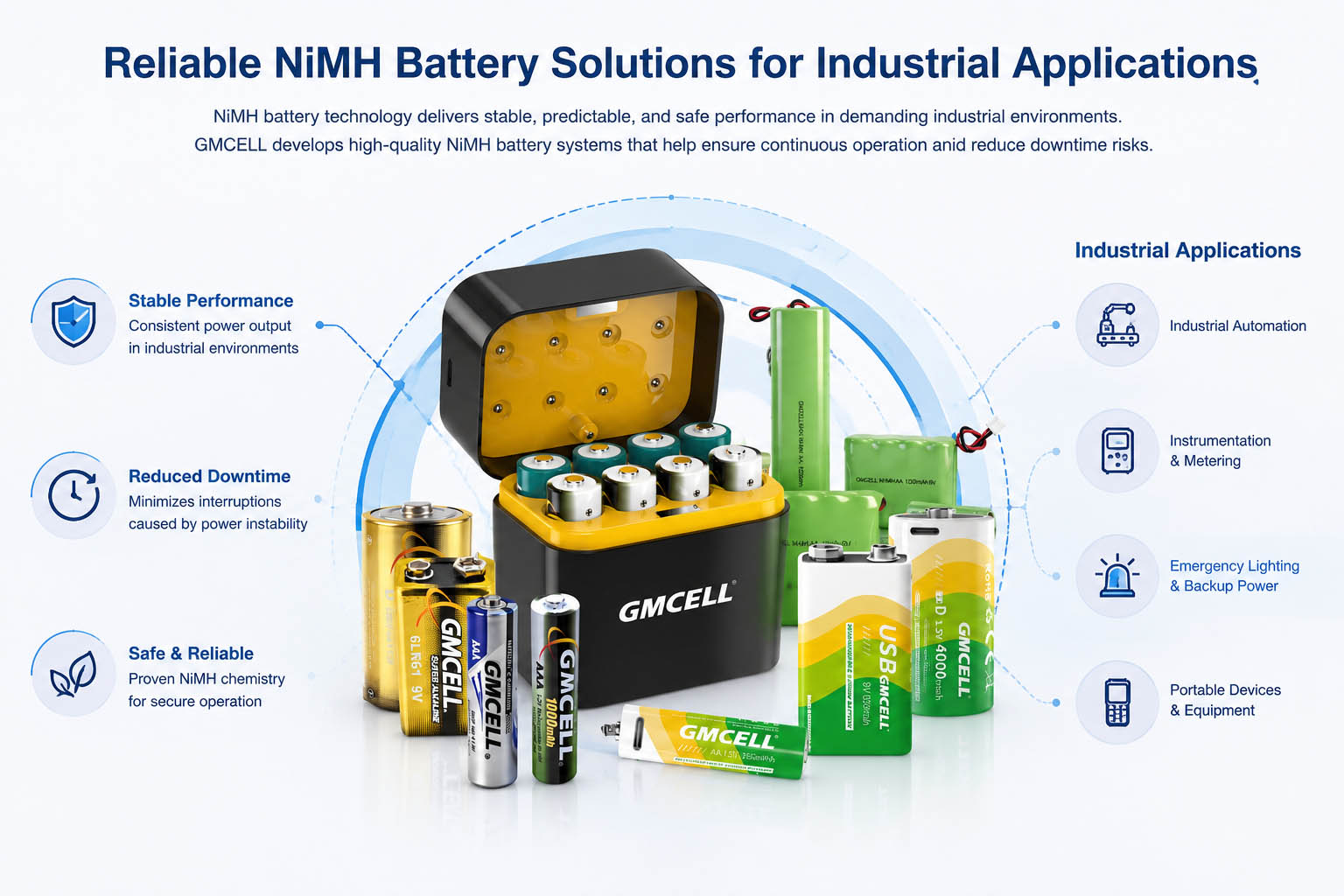
NiMH battery technology continues to play an important role in applications where reliability is more critical than energy density. Within this context, GMCELL focuses on NiMH-based system design approaches that support stable performance in industrial environments.
✔ Ensures stable power delivery in industrial environments
✔ Reduces system downtime caused by power instability
✔ Provides a safe and predictable rechargeable energy solution
This article focuses on system-level reliability, battery behavior under industrial conditions, and how different rechargeable energy technologies are applied in embedded systems, industrial control environments, and backup power applications.
Why Industrial Systems Require Power Reliability
In industrial environments, power reliability is not defined by whether energy is available, but by whether the system can continuously maintain stable operation under changing electrical and environmental conditions.
Most system failures do not happen because of complete power loss, but because of subtle instability—such as *voltage fluctuation*, transient load spikes, or insufficient discharge stability under continuous operation. These small variations accumulate and eventually lead to *system downtime*, which is far more expensive than the energy system itself.
The real engineering problem is not energy supply, but system continuity. Industrial controllers, embedded devices, and monitoring systems rely on uninterrupted power behavior to maintain logic execution, memory retention, and process synchronization. Once instability occurs, the system does not gradually degrade—it fails at the logic level.
This is why modern industrial design treats backup energy systems not as auxiliary components, but as core infrastructure that defines operational stability.
Common Causes of Power Instability in Industrial Applications
Power instability in industrial systems is rarely caused by a single failure point. It is typically the result of multiple interacting conditions that gradually destabilize energy delivery.
One of the most common mechanisms is *voltage drop under load*. When industrial devices enter high-demand cycles, the energy source is required to respond instantly. If the internal resistance of the power system is not stable, output voltage decreases dynamically, leading to unpredictable system behavior.
Another critical factor is *load fluctuation*. Industrial systems rarely operate at constant consumption levels. Instead, they shift between idle, peak, and burst modes. These rapid transitions stress the energy system and expose weaknesses in discharge consistency.
Environmental conditions further amplify instability. Temperature variation changes electrochemical behavior, while long-duration operation introduces cumulative degradation effects. Over time, these factors do not just reduce performance—they change the system’s response characteristics entirely.
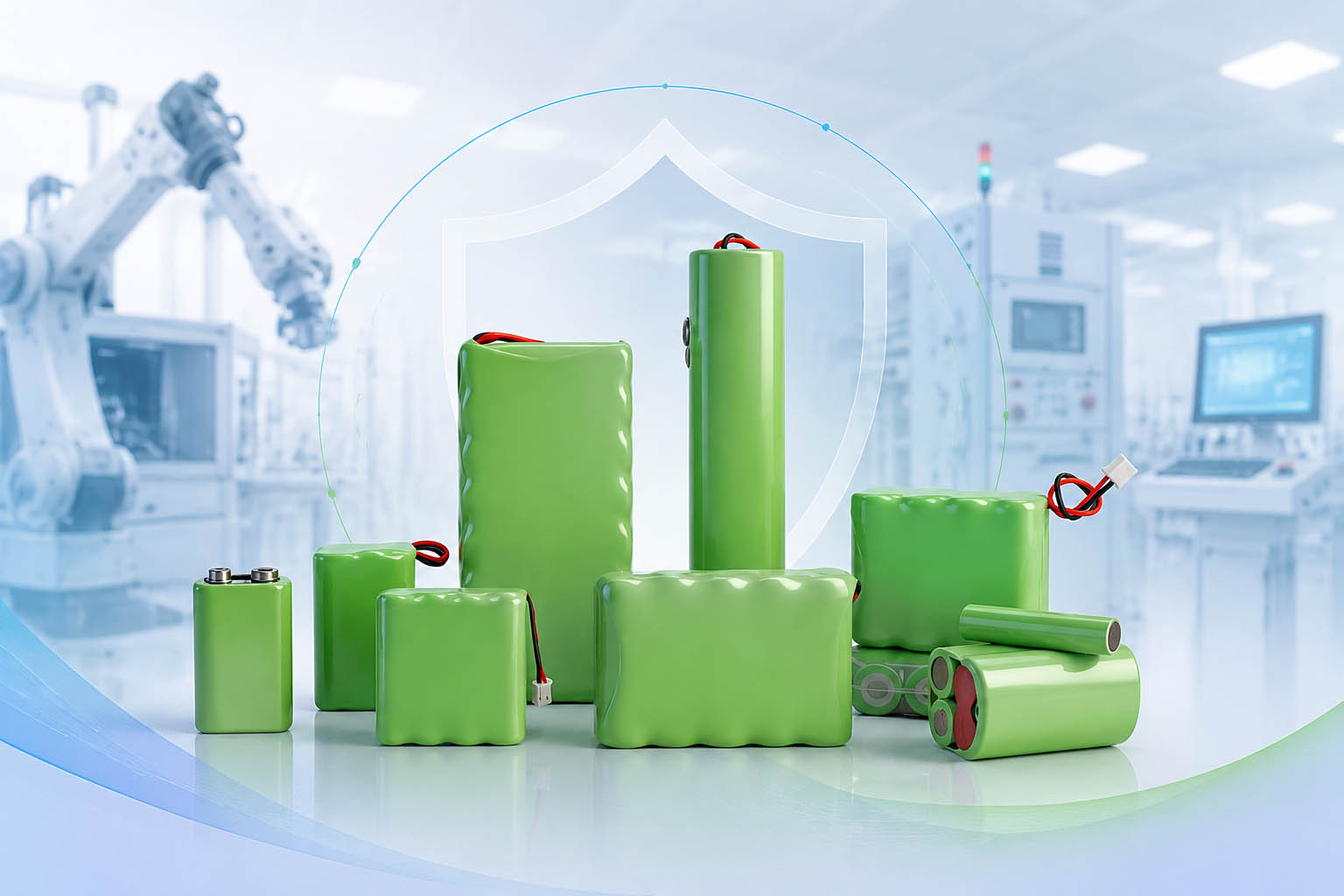
Understanding these mechanisms is essential because industrial failures are not sudden events—they are the result of predictable system-level stress accumulation.
How Rechargeable Battery Chemistry Impacts System Stability
In industrial power systems, *battery chemistry comparison* is not a theoretical topic—it directly determines how a system behaves under real operational load. The key difference between chemistries is not performance on paper, but how each system responds to stress, temperature variation, and long-term discharge conditions.
*Lithium energy density* is significantly higher, but higher density does not automatically translate into higher system stability. In contrast, *NiMH stability* is characterized by more predictable discharge behavior, especially under fluctuating load conditions where industrial systems operate most of the time.
The most important engineering factor is not which chemistry is more advanced, but which one maintains a stable *discharge curve stability* under real-world conditions. Industrial systems prioritize predictable behavior because unpredictability leads directly to system-level failures, not gradual degradation.
Why NiMH Batteries Are Still Used in Industrial Systems
Despite the rapid development of lithium-based technologies, *NiMH battery advantages* continue to make this chemistry relevant in industrial environments. The reason is not cost or legacy usage, but system behavior under stress conditions.
Industrial engineers often prioritize *cycle life stability* and *predictable discharge* over maximum energy density. NiMH batteries offer a stable output profile that reduces uncertainty in embedded systems, control units, and backup power architectures.
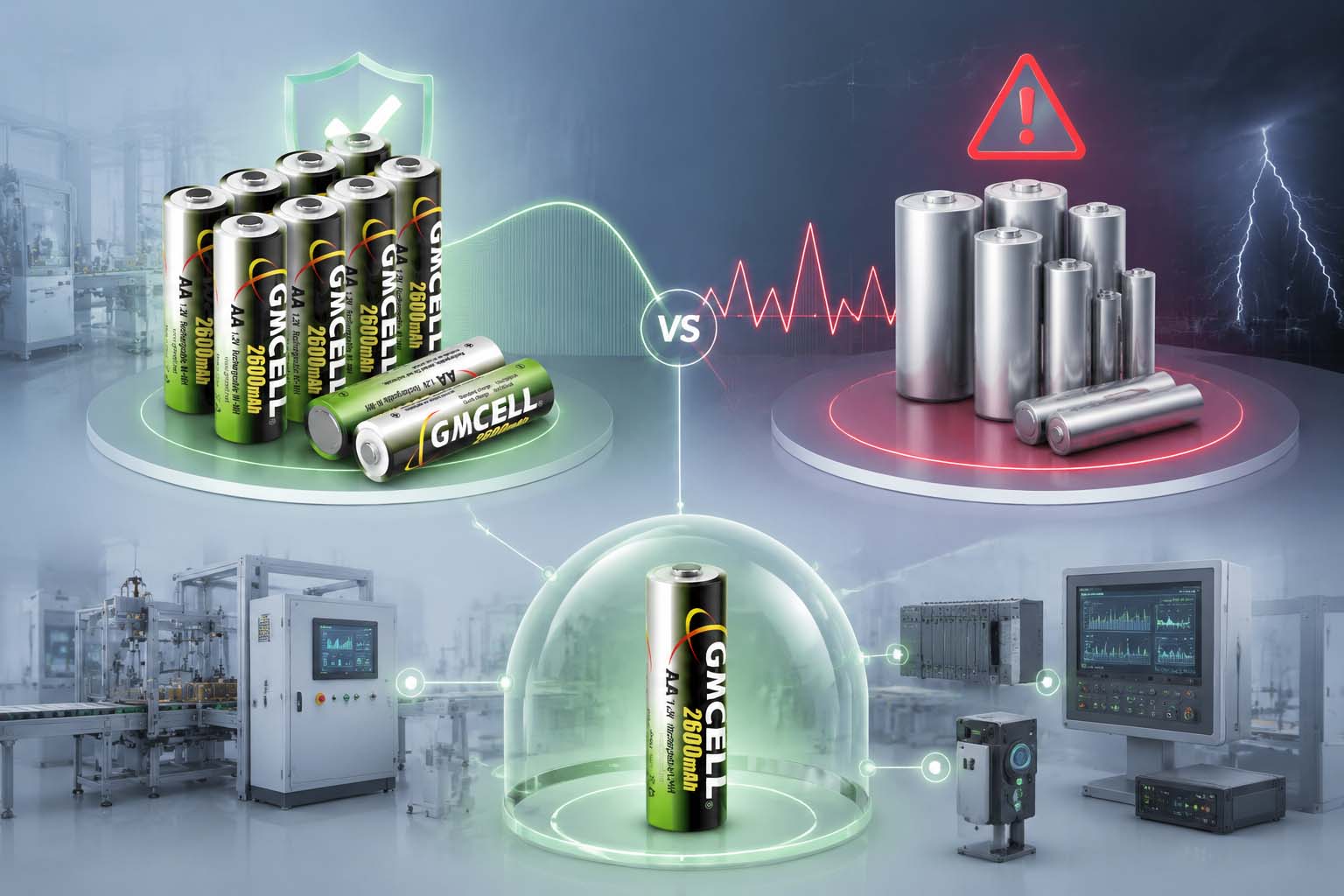
Another critical factor is *safety performance*. In environments where systems must run continuously without human supervision, predictable behavior becomes more important than peak performance. NiMH chemistry provides a stable operational envelope that reduces system-level risk.
This is why NiMH technology remains widely used in industrial control systems, embedded monitoring devices, and backup energy modules where operational reliability is the primary design constraint.
NiMH Battery Packs in Embedded and Industrial Applications
In embedded and industrial systems, failure rarely starts at the battery level—it starts at the moment the system loses voltage predictability. When a power source cannot maintain consistent output under dynamic load, the embedded controller begins to behave unpredictably before complete shutdown occurs.
This is why NiMH battery packs are used instead of single cells. A pack is not just a capacity expansion—it is a control mechanism that stabilizes *embedded systems power* behavior by reducing internal resistance variation and distributing load stress across multiple cells.
Without this structure, *industrial control backup* systems face a chain reaction failure: voltage drops trigger controller reset → memory states are lost → system reinitialization fails → full operational halt occurs.
In *memory backup power* scenarios, even microsecond-level instability is enough to corrupt system state retention. This is why system designers prioritize predictability over raw energy density.
Design Considerations for Industrial Battery Systems
Industrial battery design begins with a fundamental misunderstanding in most systems: engineers initially treat batteries as static energy containers. In reality, they behave as dynamic response systems that directly influence control logic stability.
When *voltage stability* is not maintained under varying load conditions, the system does not fail gradually. Instead, it enters a non-linear instability phase where sensors, controllers, and communication modules lose synchronization.
This is especially critical under *temperature resistance* constraints, where chemical reaction speed inside the battery changes, leading to inconsistent discharge curves. Combined with *load performance* fluctuations, this creates a system-level instability loop.
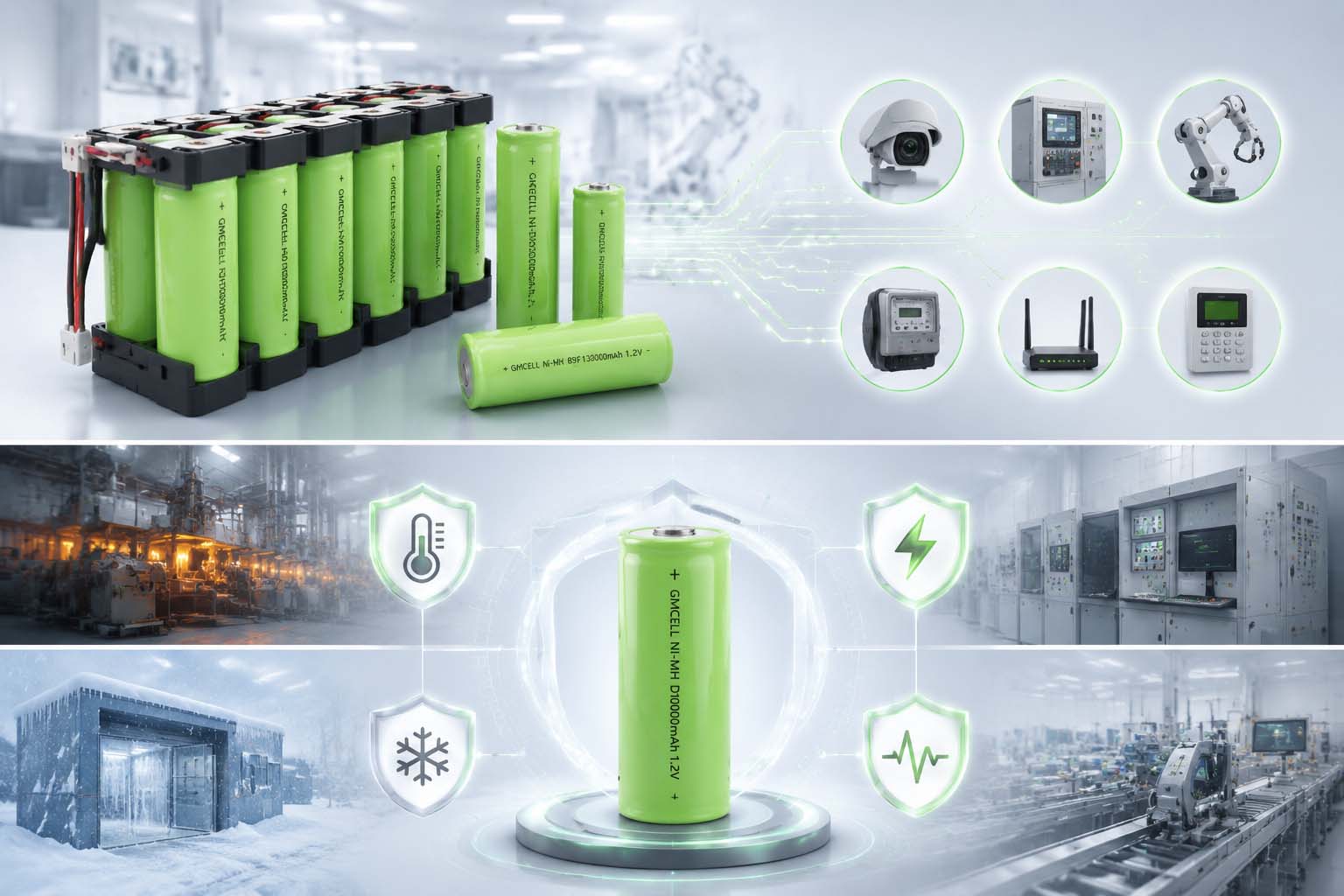
Therefore, system integration is not about selecting a battery—it is about ensuring the entire energy subsystem behaves predictably under worst-case operating conditions.
OEM Battery Pack Engineering and Custom Solutions
In industrial energy systems, *OEM battery solutions* are not defined by product catalogs, but by engineering capability. Every application requires a different balance between voltage stability, discharge behavior, thermal tolerance, and system integration constraints.
This is why *custom battery pack design* plays a critical role in industrial environments. Instead of adapting systems to standard batteries, engineers design energy modules that match the behavior of *industrial energy systems* under real operational stress conditions.
True *manufacturing capability* is not about producing cells at scale, but about ensuring consistency in system-level performance across different environmental and load conditions. This includes thermal control, discharge synchronization, and long-cycle operational stability.
Within this engineering-driven approach, GMCELL develops OEM NiMH-based battery pack systems focused on application-specific reliability rather than standardized output.
Conclusion – Building Reliable Industrial Power Systems
Industrial power systems are no longer defined by energy capacity alone, but by *industrial reliability* under real-world conditions. Whether in embedded systems, control units, or backup architectures, stability determines operational success.
Modern *energy system design* requires treating batteries as integrated components of system behavior rather than isolated energy sources. When integration is properly engineered, the entire system achieves predictable performance, reduced failure risk, and extended operational lifespan.
Ultimately, industrial power reliability is not achieved by selecting a better battery, but by designing a better system around energy behavior, load dynamics, and operational constraints.