Description
If you are looking for AA 1.5V lithium batteries, you are usually comparing more than just battery size. You may need more stable 1.5V output, longer shelf life, lighter weight, or better performance for high-drain and voltage-sensitive devices.
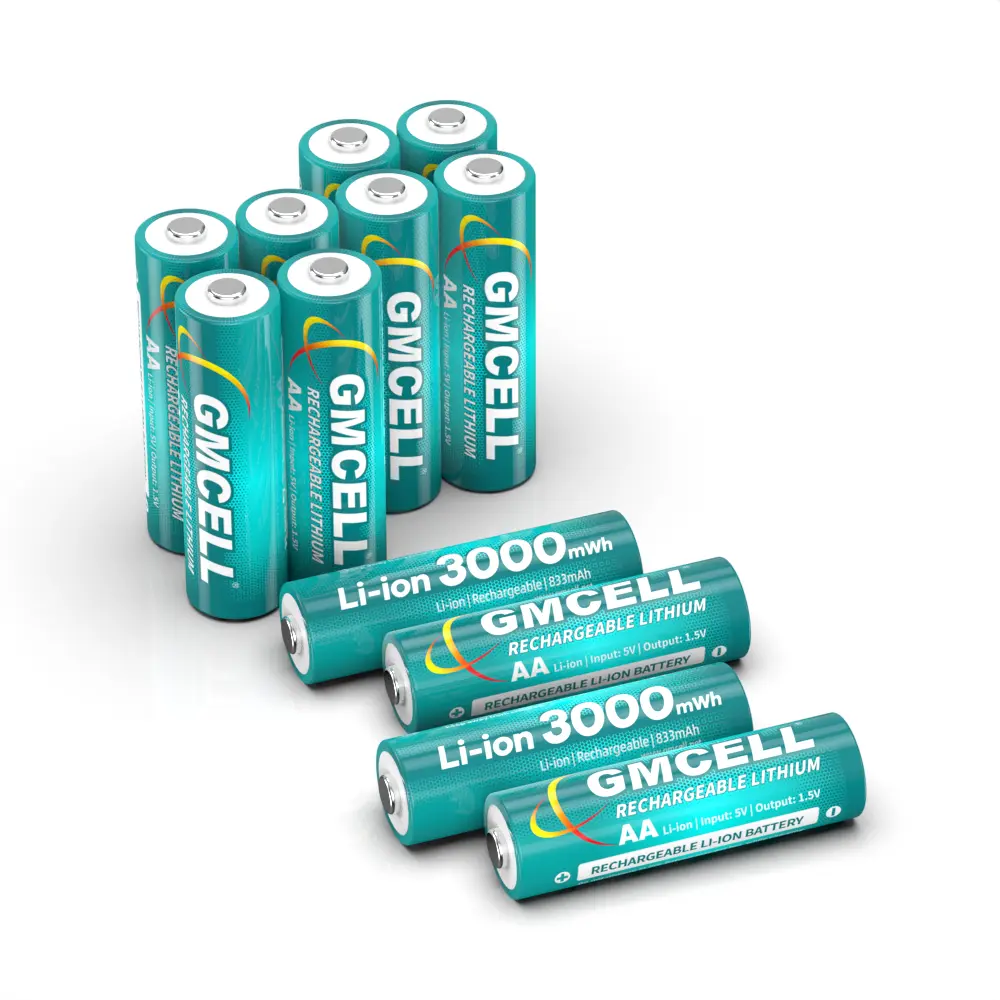
This battery category can include both non-rechargeable lithium AA batteries for backup, long storage, and low-maintenance use, and rechargeable 1.5V lithium AA options for repeated use in compatible devices. If you are comparing battery types for cameras, smart home products, controllers, sensors, or portable electronics, this page helps you understand the key differences before you choose.
AA Size Format
Rechargeable & Non-Rechargeable Options
High-Drain Device Support
Long Shelf Life
If you are choosing an AA 1.5V lithium battery, the first question is not just about capacity. The real starting point is the battery type. Some options are designed for one-time use, while others are made for repeated charging. To help you choose more clearly, the two tables below are organized by battery type and common market name, then matched with the key parameters you will usually care about before buying.
Non-Rechargeable AA 1.5V Lithium Battery Types
If you want long storage life, cold-weather reliability, and ready-to-use backup power, you will usually be looking at a non-rechargeable AA lithium battery. These products are often sold under different names online, so this table helps you connect the battery name with the key buying parameters.
| Battery Type / Product Name | Common Market Names | Best For | Typical Key Parameters | What You Should Check Before You Buy |
|---|---|---|---|---|
| Standard Non-Rechargeable AA 1.5V Lithium Battery | AA Lithium Battery AA 1.5V Lithium Battery Non-Rechargeable AA Lithium Battery |
General replacement for standard AA devices when you want lithium performance instead of alkaline. | Nominal voltage: 1.5V Chemistry: Lithium primary Capacity: usually shown in mAh Rechargeable: No |
Confirm that it is a one-time-use battery and that your device accepts standard AA 1.5V cells. |
| Long Shelf Life AA Lithium Battery | Long Shelf Life AA Lithium Battery Emergency AA Lithium Battery Backup Power AA Battery |
Emergency kits, backup storage, infrequently used devices, travel kits, and prepared home storage. | Nominal voltage: 1.5V Shelf life: often promoted as long-term storage Storage performance: key selling point Low self-loss during storage |
Check the stated shelf life, storage conditions, packaging date, and whether the product is positioned for backup use. |
| Low Temperature AA Lithium Battery | Cold Weather AA Lithium Battery Low Temperature AA Battery Outdoor AA Lithium Battery |
Outdoor devices, winter use, travel gear, sensors, flashlights, and equipment used in cold environments. | Nominal voltage: 1.5V Operating temperature: wide-range performance is the key point Chemistry: often lithium primary Cold-start reliability |
Always check the stated operating temperature range instead of assuming all lithium batteries behave the same in cold conditions. |
| Leak-Resistant AA Lithium Battery | Leak-Resistant AA Lithium Battery Leakproof AA Lithium Battery Anti-Leak AA Battery |
Smart locks, remotes, safety devices, medical tools, and electronics that stay loaded for long periods. | Nominal voltage: 1.5V Leak resistance: major selling point Shelf life: often paired with long storage messaging Primary lithium design |
Look for clear anti-leak or leak-resistant wording if the battery will remain inside your device for a long time. |
| High-Drain AA Lithium Battery | High-Drain AA Lithium Battery AA Lithium Battery for Flashlights AA Lithium Battery for Cameras |
Devices that pull more power, such as digital cameras, flashlights, and certain portable electronic products. | Nominal voltage: 1.5V Continuous discharge support: important Pulse performance: important Stable power delivery under load |
Check whether the battery is promoted for high-drain devices instead of using only capacity as your buying standard. |
| Lithium Iron Disulfide AA Battery | Lithium Iron Disulfide AA Battery Li-FeS2 AA Battery FR6 AA Lithium Battery |
Buyers who want the technical battery name or need to match a standard or chemistry description more precisely. | Chemistry: Li-FeS2 Size: AA / FR6 Nominal voltage: 1.5V Rechargeable: No |
Useful when the product page uses technical naming instead of consumer-friendly retail wording. |
Rechargeable AA 1.5V Lithium Battery Types
If you want repeated use and easier long-term value, you will usually be looking at a rechargeable AA 1.5V lithium battery. Here, the battery type matters even more, because the market often separates products by charging method, output style, and capacity positioning.
| Battery Type / Product Name | Common Market Names | Best For | Typical Key Parameters | What You Should Check Before You Buy |
|---|---|---|---|---|
| Standard AA 1.5V Rechargeable Lithium Battery | AA 1.5V Rechargeable Lithium Battery Rechargeable AA Lithium Battery AA Li-ion Rechargeable Battery |
Users who want repeated charging and a reusable replacement for standard AA-powered devices. | Output voltage: 1.5V Rechargeable: Yes Capacity: usually shown in mWh and/or mAh Cycle life: important buying point |
Make sure the product is truly 1.5V output and not a different rechargeable AA chemistry with a lower nominal voltage. |
| USB-C Rechargeable AA Lithium Battery | USB-C Rechargeable AA Lithium Battery Type-C AA Rechargeable Battery USB Rechargeable AA Lithium Battery |
Travel users, daily convenience buyers, and anyone who wants direct charging without a separate charger. | Output voltage: 1.5V Charging method: USB-C direct charging Capacity: mWh / mAh Cycle life: common selling point |
Check charging speed, cable convenience, and whether direct USB charging is more practical for your use than a dedicated charger. |
| Charger-Based AA Rechargeable Lithium Battery | AA Rechargeable Lithium Battery with Charger Charger-Based AA Lithium Battery AA Lithium Battery for Dedicated Charger |
Users who manage multiple cells together, need cleaner charging organization, or prefer a charger station setup. | Output voltage: 1.5V Charging method: external charger Capacity: mWh / mAh Cycle life: important Charger compatibility: essential |
Always confirm whether the battery requires a matching charger or supports only its own brand-specific charging system. |
| Constant 1.5V Output AA Lithium Battery | AA Constant 1.5V Battery 1.5V Stable Output AA Battery AA 1.5V Constant Voltage Battery |
Devices that are sensitive to voltage drop, such as smart locks, controllers, flashlights, and some electronics with strict startup behavior. | Output voltage: stable 1.5V Discharge curve: flat or regulated Rechargeable: Yes Device compatibility: very important |
Check whether your device benefits from a regulated 1.5V output rather than focusing only on capacity numbers. |
| High Capacity AA Rechargeable Lithium Battery | 3300mWh AA Rechargeable Battery 3600mWh AA Lithium Battery High Capacity AA Rechargeable Lithium Battery |
Users who compare runtime first and want a stronger energy-based buying reference. | Output voltage: 1.5V Energy rating: usually highlighted in mWh Capacity: may also be shown in mAh Rechargeable cycles: varies by model |
Check whether the product emphasizes mWh, mAh, or both, and compare products using the same rating style whenever possible. |
| Long Cycle Life AA Rechargeable Lithium Battery | Long Cycle Life AA Lithium Battery 1000+ Cycles AA Battery 1200 Cycles Rechargeable AA Battery |
Users who care about repeated use, lower replacement frequency, and longer-term value. | Output voltage: 1.5V Cycle life: one of the main selling points Charging method: varies by model Capacity retention after repeated use |
Check how the cycle claim is presented and whether the product is positioned for frequent daily charging rather than occasional use. |
| High-Drain Rechargeable AA Lithium Battery | High-Drain Rechargeable AA Lithium Battery AA Rechargeable Battery for Flashlights AA Rechargeable Battery for Smart Locks |
Power-hungry devices, stronger-load electronics, and applications where output stability and discharge support matter more than simple standby use. | Output voltage: 1.5V Continuous discharge support: important Stable output under load: important Capacity and cycle life: secondary but still useful |
Do not choose this type by energy number alone. Check whether the battery is described as suitable for high-drain or demanding devices. |
Rechargeable vs Non-Rechargeable AA 1.5V Lithium Batteries
If you are comparing AA 1.5V lithium batteries, one of the first questions is whether you need a rechargeable option or a non-rechargeable primary lithium battery. Both belong to the same general battery category, but they are not meant for the same use pattern.
If you replace batteries often, a rechargeable 1.5V lithium AA option may make more sense for repeated use in compatible devices. If you care more about long shelf life, standby readiness, low maintenance, or cold-weather storage, a non-rechargeable lithium AA battery is often the better fit.
Not all lithium AA batteries are rechargeable
Frequent use vs backup use
Charging vs no charging
Why Some Devices Need More Stable 1.5V Power
In many everyday devices, battery size alone is not the whole story. Some products work best when power delivery stays more consistent through more of the usage cycle. That is one reason why many buyers pay closer attention to AA 1.5V lithium batteries, especially when they are comparing them with alkaline or NiMH options.
Alkaline batteries are still common for general-purpose use, but their voltage typically drops over time as they discharge. In higher-drain or voltage-sensitive devices, that drop can affect the overall experience sooner than expected. Some 1.5V lithium AA solutions are chosen because they are designed to deliver a more stable output profile for cameras, smart devices, controllers, sensors, and other specialty uses.
High-drain use
More consistent output behavior
Not all devices should be swapped freely
Typical Applications for AA 1.5V Lithium Batteries
If you are comparing AA 1.5V lithium batteries, you are probably not only looking at size. You are also thinking about where the battery will be used, how often it will need to be replaced, and whether the device benefits from more stable power over time.
This battery type is often considered for devices that value runtime, stable power, low replacement frequency, or lighter battery weight. The groups below show common application categories without going too deep into model-level compatibility.
Stable power delivery
Less frequent replacement
Portable device support
High-Drain Electronics
These devices are often chosen for one simple reason: they may benefit more from steady output and dependable runtime during active use.
Cameras
Camera Flash / Speedlight
Flashlights
Torches
Xbox Wireless Controller
Game Controllers
Meta Quest 3 Touch Plus Controllers
Meta Quest 3S Touch Plus Controllers
Wireless Keyboards
Remotes
Remote Control
Microphone
Consumer Electronic Devices
Longer Runtime
Less Mid-Use Drop
Smart Home & Security
In this category, many users care less about power tools or toys and more about dependable operation, fewer battery swaps, and the right fit for installed devices.
Smart Lock Deadbolt
Doorbells
Wireless Sensors
Security Cameras
Blink Cameras
Blink Outdoor 4
Blink Video Doorbell
Blink Outdoor (3rd Gen)
Blink Indoor (3rd Gen)
Blink XT
Blink XT2
Blink Indoor (1st Gen)
Nest Protect (battery powered)
Nest Protect (wired backup battery)
Nest Heat Link
Ring Alarm Motion Detector
Ring Alarm Glass Break Sensor
Alarm System
Security Alarm System
Water Leak Detector
Freeze Alarm
Reliable Operation
Lower Replacement Frequency
Household & Portable Devices
This group covers more everyday battery-powered products where buyers may value lighter weight, practical runtime, and less hassle in normal portable use.
Browning Trail Cameras
SPYPOINT Trail Cameras
Trail Cameras
AcuRite Weather Stations
AcuRite 5-in-1 Weather Sensor
AcuRite Outdoor Temperature / Humidity Sensors
Weather Stations
Thermometer
Hygrometer
Clocks
Toys
Games
Motorized Toys
Electronic Toothbrushes
Selected Medical Accessories
Convenient Runtime
Everyday Portability
AA 1.5V Lithium Batteries vs Other Common AA Battery Types
If you are choosing between AA 1.5V lithium batteries and other common AA battery types, the right answer usually depends on how the device is used. Some buyers care most about stable output and long shelf life, while others focus on rechargeability, lower upfront cost, or everyday convenience.
The comparison below is designed to help you make a faster decision. Instead of going too deep into technical terms, it focuses on the practical differences that matter most when you are comparing battery options for real devices.
Runtime in Real Use
Shelf Life
Rechargeability
Device Fit
| Comparison | What to Notice | AA 1.5V Lithium Advantage | Best Fit For |
|---|---|---|---|
| Lithium AA vs Alkaline AA | Voltage stability, runtime in high-drain devices, shelf life, weight, cold-weather use, and price. | Usually more attractive when you want steadier output, lighter weight, longer storage life, or better low-temperature performance. | High-drain devices, backup storage, cold-weather use, and buyers who want stronger performance rather than the lowest upfront cost. |
| Lithium AA vs NiMH AA | Nominal voltage, rechargeable capability, frequent-use suitability, device compatibility, and charger requirements. | A better fit when your device benefits from a 1.5V system or when you want to focus on stable-output applications rather than standard 1.2V rechargeable use. | Buyers comparing device behavior, output expectations, and long-term use patterns rather than only looking at rechargeability. |
| Rechargeable 1.5V Lithium AA vs Primary Lithium AA | Reuse, maintenance, runtime, voltage behavior, charging needs, and device-specific suitability. | Rechargeable models are better for repeated use in compatible devices, while primary lithium is often stronger for long storage, standby readiness, and low-maintenance needs. | Buyers deciding between repeated daily use and long-term backup, emergency storage, or device-specific primary-lithium recommendations. |
How to Choose the Right AA 1.5V Lithium Batteries
After comparing battery types, the next question is simple: which option makes the most sense for your actual use? The answer usually comes down to how often the device is used, how sensitive it is to voltage behavior, and whether you want rechargeability or lower maintenance.
The quick guide below helps you match the battery type to the way you really use the device, instead of choosing based on battery name alone.
For Frequent Daily Use
If you replace batteries often and use the device regularly, a rechargeable 1.5V lithium AA option may be worth prioritizing for repeated-use convenience in compatible devices.
For Long-Term Backup or Emergency Kits
If your priority is storage readiness, low maintenance, and dependable standby use, primary lithium AA batteries are usually the better direction to look at first.
For High-Drain Electronics
If the device consumes more power during active use, pay closer attention to stable output, runtime, and device requirements instead of choosing only by size.
For Smart Home or Security Devices
In installed devices like locks, sensors, or doorbells, focus on device compatibility, voltage sensitivity, and replacement frequency before choosing a battery type.
For Cold or Hot Environments
If the battery may be used or stored in more demanding temperatures, pay extra attention to temperature performance and shelf life before making a final decision.
Voltage Requirement
Rechargeable Compatibility
Charging Method
Usage Frequency
Temperature Conditions
Frequently Asked Questions About AA 1.5V Lithium Batteries
If you are still comparing battery types, these quick answers can help you clear up the most common questions before you choose the right option for your device.
This section focuses on the questions buyers ask most often about rechargeability, voltage, device requirements, charger needs, and the difference between lithium AA batteries and more common AA options.
Voltage Questions
Device Compatibility
Charging Guidance