
How AI-Powered Devices Depend on Reliable Battery Technology
Artificial intelligence is no longer limited to cloud platforms and large computing systems. Today, AI technologies are becoming part of everyday devices, including smart wearables, industrial robots, autonomous systems, IoT sensors, and edge computing devices that operate closer to where data is generated.
While advanced AI models, powerful processors, and intelligent sensors determine what these devices can do, their real-world performance also depends on a reliable power source. Without stable energy supply, even the most advanced AI hardware cannot maintain continuous operation, process information effectively, or deliver consistent results in practical environments.
Battery technology directly influences important factors such as operating time, system availability, safety, and maintenance cycles. For devices deployed in remote locations or mission-critical applications, predictable power performance can be just as important as computing capability.
As AI-powered hardware continues to evolve, different applications require different energy solutions. Depending on design requirements, operating conditions, and performance expectations, technologies such as NiMH batteries, lithium-ion batteries, and primary lithium batteries each serve unique roles in supporting the next generation of intelligent devices.
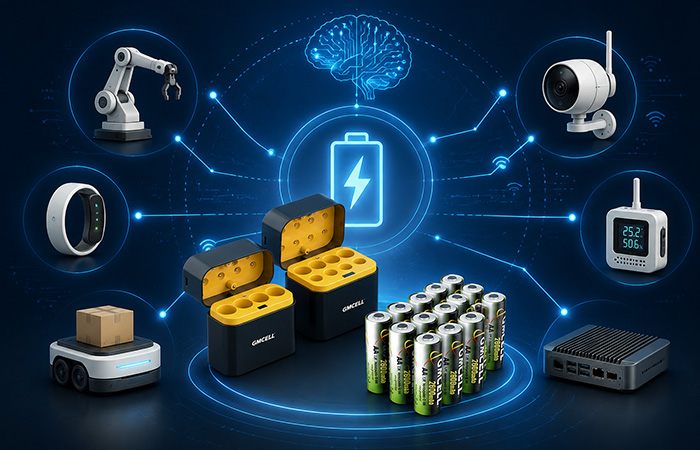
Why AI Devices Need More Reliable Power Systems
Artificial intelligence is moving beyond traditional cloud-based applications. More AI capabilities are now being integrated directly into physical devices, allowing machines to analyze information and make decisions closer to where data is generated.
From smart cameras and industrial robots to wearable devices and IoT sensors, many intelligent systems are becoming more independent and decentralized. This shift from cloud computing toward edge computing creates new requirements for reliable energy sources because these devices often operate in locations where direct power access is limited.
AI Is Moving From Cloud to Edge
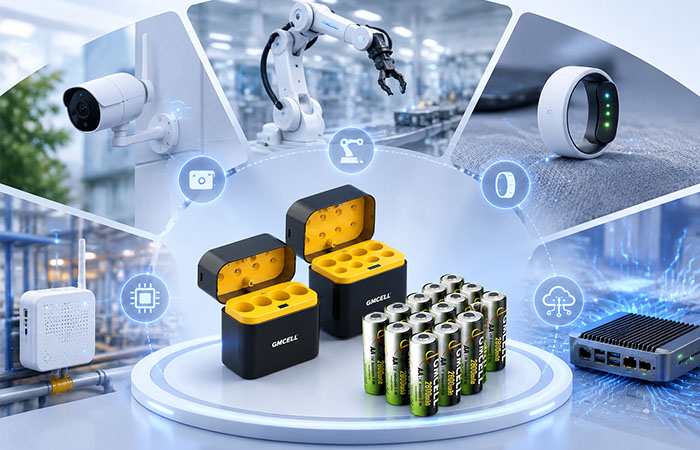
In the past, many AI tasks were performed mainly through centralized cloud servers. However, modern applications increasingly require faster responses, lower latency, and continuous operation. As a result, AI processing is moving closer to the physical environment through edge devices.
These systems may include autonomous robots, intelligent cameras, wearable electronics, and industrial monitoring devices. Unlike traditional computers connected to stable power infrastructure, edge devices often need to operate independently for extended periods.
When an AI device operates away from the electrical grid, power reliability becomes a critical factor. A powerful processor or advanced algorithm cannot deliver value if the device cannot maintain stable operation.
AI Hardware Cannot Perform Without Stable Energy
AI-powered hardware depends on continuous operation to collect data, process information, and respond to real-world conditions. For many applications, unexpected power interruptions can create operational problems beyond simple downtime.
Industrial Robots
Sudden power loss may lead to data loss, interrupted tasks, and unnecessary system restart procedures.
Security Cameras
Power instability may cause missed recordings and reduce the reliability of real-time monitoring systems.
Wearable Devices
Battery interruptions can affect health tracking, communication, and continuous user experiences.
For AI-enabled devices, the goal is not simply choosing the battery with the largest capacity. The priority is achieving stable performance, predictable operation, and reliable energy delivery that matches the actual application requirements.
Battery Challenges in AI-Powered Smart Devices
As AI becomes more integrated into smart hardware, energy requirements are becoming increasingly complex. Modern intelligent devices need to balance computing performance, operating time, reliability, and physical design limitations.
Power Consumption Is Increasing
AI models are becoming more advanced, requiring devices to process larger amounts of information and perform more tasks locally. This growth creates higher energy demand because intelligent hardware often combines multiple power-consuming components.
Many AI devices now rely on a combination of more sensors, higher computing requirements, and continuous communication. These factors make battery selection an important part of overall system design.
Battery Performance Must Match Device Requirements
Different AI applications have different energy priorities. A wearable device may focus on compact design and safety, while an industrial system may require long service life and dependable operation.
| Application | Battery Requirement |
|---|---|
| Wearable Devices | Compact size, safety, and reliable daily operation |
| Robotics Systems | High discharge capability and stable energy delivery |
| Industrial Devices | Long service life and predictable performance |
| IoT Sensors | Low maintenance and extended operation |
How Battery Technology Supports Edge AI and Industrial Applications
As artificial intelligence moves from cloud platforms into real-world devices, choosing the right power solution becomes an essential part of system design. AI-enabled equipment must operate reliably in environments where stable energy delivery directly affects performance, availability, and maintenance requirements.
Different applications have different priorities. Some systems require long operating periods, while others need consistent current delivery or enhanced safety. This is why battery selection depends on the actual requirements of the device rather than simply choosing the highest capacity option.
Industrial Automation Requires Predictable Power
Industrial AI systems often work continuously behind the scenes. Equipment such as industrial controllers, sensors, and monitoring systems depend on reliable energy to collect data, maintain communication, and support automated decision-making processes.
In these environments, battery performance is measured by more than available capacity. Engineers usually focus on factors such as stable voltage, reliable cycle performance, and long service life because unexpected power interruptions can affect the entire system operation.
For many industrial and embedded applications, NiMH Battery technology remains a practical choice because it provides stable performance, reliable cycling capability, and proven safety characteristics.
Controllers
Require dependable power to maintain system settings and operational logic.
Sensors
Need consistent energy for continuous data collection and communication.
Monitoring Systems
Depend on reliable operation to avoid unexpected downtime.
Robotics and Embedded Systems Need Consistent Energy Delivery
Robotics represents another important area where AI and battery technology meet. Modern robots combine motors, sensors, processors, and communication modules that must work together with precise timing.
For these systems, predictable current delivery helps maintain stable movement, accurate sensing, and consistent operation. A suitable battery solution depends on the specific design requirements, including power demand, operating environment, and expected service conditions.
There is no single battery chemistry that fits every intelligent device. Different technologies provide different advantages, and selecting the right option requires understanding the balance between performance, safety, size, and lifecycle expectations.
NiMH vs Lithium-ion: Choosing the Right Battery for Intelligent Devices
When designing AI-powered hardware, there is no universal battery solution that works for every application. Engineers need to evaluate different battery technologies based on factors such as safety, energy requirements, operating conditions, and expected lifetime.
Battery chemistry selection is especially important for intelligent devices because the power source directly influences system reliability. While lithium-ion batteries are widely recognized for high energy density, NiMH technology continues to be considered in applications where stability, safety, and predictable performance are important.
| Factor | NiMH | Lithium-ion |
|---|---|---|
| Safety | Excellent stability for many applications | Requires protection systems and thermal management |
| Energy Density | Moderate | High |
| Cycle Stability | High | High with proper management |
| Thermal Management | Simpler requirements | More complex requirements |
Engineers often compare different battery chemistries before selecting a solution. A detailed discussion of nimh battery vs lithium ion performance helps explain why different applications choose different technologies based on their unique requirements.
How Artificial Intelligence Improves Battery Management
Artificial intelligence is not only changing the way devices process information; it is also transforming how energy systems are monitored and managed. As smart hardware becomes more complex, intelligent battery management helps improve reliability, efficiency, and operational visibility.
By analyzing real-time operating data, AI-based systems can support better decisions about charging behavior, battery condition, and maintenance requirements. This creates a closer connection between intelligent software and the physical energy systems that power modern devices.
Intelligent Battery Monitoring
One of the most important applications of AI in battery management is continuous monitoring. Intelligent systems can analyze key operating parameters such as voltage, temperature, and current to better understand battery behavior during real-world operation.
This type of data-driven approach helps engineers identify abnormal conditions earlier, improve system safety, and make better decisions about battery usage in applications such as industrial equipment, smart devices, and IoT infrastructure.
Voltage Analysis
Helps evaluate battery output stability and operating conditions.
Temperature Monitoring
Supports safer operation by tracking environmental changes.
Current Management
Provides insights into energy usage patterns and performance.
Predictive Maintenance for Battery Reliability
Traditional maintenance methods often rely on fixed schedules. However, AI-based analysis allows systems to evaluate actual operating conditions and identify early signs of battery degradation.
By understanding changes in battery performance, intelligent systems can support predictive maintenance strategies that help reduce unexpected failures and improve overall equipment reliability.
Intelligent Charging Optimization
AI can also improve charging management by analyzing usage patterns and operating conditions. Intelligent charging strategies can help optimize charging cycles, reduce unnecessary stress on batteries, and improve long-term system efficiency.
Overall, AI can help improve battery reliability and operational efficiency by connecting real-time data analysis with smarter energy management.
The Future of AI Hardware Depends on Better Energy Solutions
Artificial intelligence will continue expanding into more physical environments. From autonomous machines and industrial robots to IoT infrastructure, intelligent systems will require energy solutions that support continuous operation and dependable performance.
As AI applications become more distributed, battery technology will become an increasingly important part of hardware design. Future intelligent devices will need power solutions that balance reliability, safety, efficiency, and application-specific requirements.
As AI-powered hardware continues to expand, battery manufacturers such as GMCELL are developing customized solutions for applications that require reliable rechargeable cells, battery packs, and industrial power systems.
The relationship between artificial intelligence and energy technology will continue to evolve. Better algorithms require better hardware foundations, and reliable power remains one of the key elements that enables intelligent systems to operate successfully in the real world.
Conclusion
The future of artificial intelligence is not defined by software alone. While advanced models and algorithms continue to improve, intelligent devices also depend on reliable hardware foundations that allow them to operate continuously and safely.
From edge computing devices to industrial automation systems, reliable energy enables intelligent systems to transform ideas into practical solutions. As AI continues to move into the physical world, dependable battery technology will remain an essential part of that evolution.
Frequently Asked Questions About AI Devices and Battery Technology
As AI becomes increasingly integrated into smart hardware, choosing the right energy solution has become an important part of device design. Below are common questions about AI-powered devices, battery reliability, and how different technologies support intelligent systems.