
The Role of NiMH Batteries in Reliable Industrial Power Systems
Industrial power systems are not designed around energy density alone. You also need stable operation, predictable voltage behavior, manageable maintenance and dependable performance throughout the equipment’s service life.
This guide helps you understand where NiMH technology fits, how it supports industrial reliability and which electrical, thermal and mechanical factors you should evaluate before choosing a battery pack.
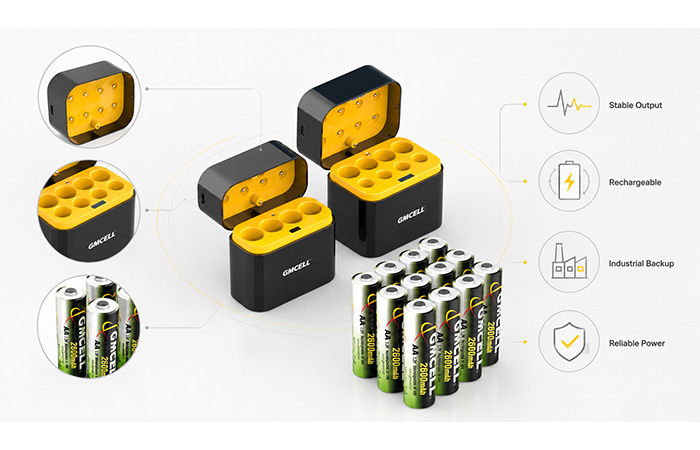
Reliable industrial power begins with matching battery behavior to your equipment, operating environment and maintenance strategy.
Industrial Power Is About More Than Energy Density
When you choose a battery for a smartphone or another consumer device, compact size, low weight and maximum runtime may dominate the decision. Industrial equipment creates a different set of priorities. You must consider whether the system can continue operating reliably, preserve important data, withstand demanding conditions and remain serviceable years after installation.
A well-designed NiMH Battery solution can provide predictable voltage behavior, proven rechargeability and dependable operation in applications where reliability matters more than maximum energy density.
NiMH is not the highest-energy-density chemistry available, and it is not the correct answer for every industrial system. Its value comes from a mature electrochemical platform, flexible pack configurations and well-understood charging behavior. These qualities continue to make it relevant in equipment where stable operation, long-term availability and predictable maintenance matter more than achieving the smallest possible battery footprint.
What You Need From an Industrial Battery System
A reliable industrial battery solution should be evaluated as part of the complete equipment design—not as an isolated capacity specification.
What Makes an Industrial Power System Reliable?
A reliable industrial power system does more than keep equipment switched on. It helps your controller preserve data, your sensors continue reporting and your equipment complete essential processes without an unexpected interruption. This means you must evaluate the battery as part of the complete power architecture rather than relying on capacity or nominal voltage alone.
Industrial battery reliability is shaped by the interaction between the cells, charging method, pack construction, device load and operating environment. A battery with an impressive capacity rating can still perform poorly if it experiences unstable voltage under load, excessive charging heat, weak cell matching or unsuitable environmental conditions.
Voltage Stability
Your equipment needs a voltage range that remains compatible with the electronics throughout the discharge cycle. Stable voltage under normal and peak loads helps reduce resets, communication errors and unexpected shutdowns.
Predictable Runtime
You need to estimate how long the equipment can operate before charging or replacement. Runtime should remain reasonably consistent across production batches, temperatures and repeated cycles.
Safe Charging Behavior
The charger must match the battery chemistry, capacity and operating temperature. Correct current control, charge termination and temperature monitoring help prevent unnecessary heat and premature aging.
Temperature Tolerance
Industrial equipment may operate in warehouses, vehicles, outdoor cabinets or factory environments. The battery must remain suitable for your expected charging and discharging temperature range.
Cycle-Life Consistency
The number of usable cycles matters, but consistency matters just as much. Your system should not depend on a best-case laboratory value that cannot be maintained under real operating conditions.
Long-Term Serviceability
For equipment expected to remain in service for years, you need a battery format that can be inspected, replaced and sourced without redesigning the complete power system.
Reliability Problems Often Appear as Equipment Failures
A battery problem may first appear as a controller, memory, communication or maintenance issue rather than an obvious cell failure.
A sudden voltage drop causes a controller to restart during a peak-load event.
A backup pack cannot preserve configuration data, memory or the real-time clock during a power interruption.
Poor cell matching causes one weak cell to limit the usable capacity of the entire pack.
Charging at an unsuitable temperature creates excessive heat and accelerates capacity loss.
Repeated deep discharge leaves the pack with inconsistent capacity recovery.
A loose connector, damaged lead wire or weak terminal interrupts power even when the cells remain functional.
Why NiMH Batteries Remain Relevant in Industrial Applications
NiMH is not selected because it has the highest energy density. You consider it when your equipment benefits from a mature rechargeable chemistry, familiar voltage characteristics and flexible battery-pack construction. In reliability-focused systems, these practical engineering qualities can be more valuable than minimizing every gram or millimeter.
The suitability of NiMH still depends on the load, charger, temperature and maintenance schedule. However, when these factors are correctly matched, the chemistry can support predictable industrial operation across a broad range of equipment types.
Proven and Mature Chemistry
NiMH has been used for many years, so its charge behavior, aging characteristics and common failure modes are well understood. This gives you a more established engineering foundation when developing equipment with a long service life.
Practical 1.2V Cell Platform
A NiMH cell has a nominal voltage of approximately 1.2V. By connecting cells in series, you can create a battery pack that matches the voltage requirements of controllers, instruments and embedded systems.
Tolerance of Demanding Conditions
NiMH can be suitable for applications that experience repeated charging, variable loads or less-than-ideal field conditions. Appropriate charging and temperature controls remain essential, but the chemistry is valued for its mature and comparatively robust behavior.
Rechargeability Reduces Maintenance
In equipment that is used regularly, a rechargeable pack can reduce the need to replace disposable batteries. This is especially useful when your devices are installed in remote, restricted or labor-intensive locations.
Flexible Pack Configuration
You can adapt a NiMH pack to the available space, required voltage and connection method instead of forcing the equipment around a fixed consumer battery format.
Long-Term Supply Planning
Industrial products may remain active for many years. A mature battery platform can support replacement planning, product servicing and continued supply without forcing frequent changes to the equipment design.
A NiMH Pack Can Be Designed Around Your Equipment
Your final battery configuration should reflect the electrical, mechanical and thermal requirements of the application rather than a generic catalog specification.
Where NiMH Batteries Are Used in Industrial Power Systems
NiMH batteries are most useful when their electrical behavior matches the operating priorities of the equipment. You should not choose the chemistry simply because it appears in a particular industry. Instead, consider why the device needs backup power, how often the battery will cycle and what happens if the power source fails.
The following examples show how industrial NiMH battery packs can support reliability-focused functions across different types of equipment.
Industrial Controllers and PLC Backup
A controller may not require a large amount of stored energy, but it may need dependable backup power to preserve programs, configuration parameters, temporary process data or a real-time clock.
Why NiMH may fit: predictable standby support and a rechargeable format can be more important than maximum energy density.
Medical and Diagnostic Equipment
Portable instruments, diagnostic devices and selected backup-power functions may use rechargeable battery packs when stable operation and practical maintenance are required.
Battery selection must always follow the device specification, applicable standards, risk controls and required certifications. NiMH is not automatically suitable for every medical application.
Security and Emergency Systems
Access-control units, alarm systems, security controllers, emergency lighting and wireless sensors may require power during outages or temporary interruptions.
Why NiMH may fit: the battery can support repeated charging while helping reduce routine replacement visits.
Test and Measurement Equipment
Portable testers, data loggers, measurement instruments and data-acquisition units often need a battery that can deliver consistent output across repeated field use.
Why NiMH may fit: standard cell formats and flexible pack layouts can simplify servicing and replacement.
Embedded Electronics
Embedded devices that are not constrained by an extremely thin or lightweight enclosure may prioritize predictable service life, stable voltage and straightforward maintenance.
Why NiMH may fit: the pack can be configured around the enclosure, wiring and device voltage requirements.
Robotics and Automated Equipment
Rechargeable packs may support control modules, portable operator interfaces, auxiliary systems or backup functions within automated equipment.
Why NiMH may fit: repeatable cycling and custom pack construction can support equipment-specific power requirements.
Communication and Remote-Monitoring Equipment
Gateways, remote terminals, communication modules and field-monitoring devices may need backup power to complete data transmission or maintain essential functions during a supply interruption.
Why NiMH may fit: rechargeable backup power can reduce maintenance where physical access is inconvenient.
Start With the Equipment Requirement
The application name alone cannot determine the correct chemistry. You still need to examine voltage, runtime, charging frequency, available space, temperature and replacement strategy.
Choose NiMH when its actual electrical and service characteristics align with your complete system.
In an industrial controller, for example, you may not need the highest possible energy density. You may instead need the battery to remain ready after extended standby, preserve essential data and provide enough power for a controlled shutdown. This is why the most suitable industrial battery is determined by system behavior and failure consequences, not by a single headline specification.
How NiMH Voltage Behavior Supports System Reliability
A nominal voltage value tells you how a battery is classified, but it does not tell you exactly what your equipment will experience during operation. A NiMH cell is commonly described as a 1.2V rechargeable cell, yet its actual voltage changes after charging, when a load is applied and as the available capacity is gradually consumed.
To design a reliable industrial power system, you need to understand the complete discharge profile rather than calculating pack voltage only as 1.2V × the number of cells. Your electronics must remain functional across the realistic voltage range of the battery pack, including startup loads, peak-current events and the final stage of discharge.
What Your Equipment Sees During a Typical Discharge
The exact profile varies by cell design, current, temperature and age, but the following stages help you interpret NiMH behavior at system level.
After Charging
The cell voltage may initially sit above its nominal value. This higher reading does not mean the cell can maintain that voltage throughout the complete discharge cycle.
Initial Load Response
When your equipment begins drawing current, the voltage drops from its resting value. The size of this drop depends strongly on current demand and cell resistance.
Working Plateau
Much of the usable capacity is delivered through a comparatively stable operating region. This predictable voltage platform can simplify system behavior when the load is properly matched.
Peak-Load Variation
Motors, radios, pumps and processors may create short current peaks. During these events, the temporary voltage drop can be greater than the change seen under the normal continuous load.
End of Discharge
As usable capacity approaches depletion, voltage begins to fall more rapidly. Your equipment should recognize this stage before unstable operation or excessive cell discharge occurs.
What Changes the Actual Voltage Profile?
A datasheet curve is a useful reference, but your real equipment may produce a different result. Evaluate the battery under the expected load and environmental conditions.
Series-Pack Voltage Is the Sum of Every Cell
In a series NiMH pack, the total output is produced by adding the instantaneous voltage of each cell. This creates the required pack voltage, but it also means that a weak cell can affect the complete system.
Pack voltage = Cell 1 + Cell 2 + Cell 3 + …
The calculation is simple, but reliable design requires you to consider how every cell behaves under load, near the end of discharge and after repeated cycling.
Do Not Design Around Nominal Voltage Alone
Before you confirm the number of cells, verify the full voltage window that your electronics and power-conversion stage can accept.
Cell Matching and Pack Consistency
A series battery pack behaves as a connected system, not as a collection of independent cells. Every cell carries the same current, but the cells may not reach the same voltage, temperature or state of charge at the same moment. For this reason, cell matching is one of the most important foundations of a reliable industrial NiMH battery pack.
The usable capacity of your pack is not determined by its strongest cell. In practice, performance is often limited by the cell that reaches the end of discharge first, develops the highest resistance or accepts charge differently from the rest of the group.
Cells in the Same Pack Should Be Closely Aligned
One Weak Cell Can Limit the Entire Pack
When one cell reaches a low state of charge before the others, the remaining cells may continue pushing current through it. Under severe conditions, this can drive the weak cell toward cell reversal.
Even before reversal occurs, a weak cell can reduce usable runtime, create uneven heating and cause the battery pack to reach its system cutoff earlier than expected.
What Poor Cell Matching Can Cause
How Pack Consistency Is Built Into Production
Reliable pack performance starts before final assembly. A controlled production process helps identify cells with comparable characteristics and verifies that the completed pack behaves as expected.
Cell Grading
Cells are classified using defined electrical and quality criteria.
Capacity Testing
Usable capacity is measured under controlled charge and discharge conditions.
Resistance Measurement
Internal-resistance differences are checked before cells are grouped.
Voltage Sorting
Cells are compared at a controlled state before pack assembly.
Pack Verification
Wiring, polarity, insulation, connectors and pack voltage are confirmed.
Charge-Discharge Test
Completed packs are evaluated against defined functional requirements.
Charging Control for Industrial NiMH Battery Packs
A rechargeable battery pack cannot be evaluated separately from its charger. The charge current, termination method, temperature limits and maintenance strategy all affect runtime, heat generation and long-term capacity. A pack that performs well in discharge testing may still age quickly if the charging system repeatedly exposes it to excessive current, temperature or overcharge.
Your charging strategy should match the cell specification and the required charging time. Low-rate NiMH charging can use simpler controls but takes longer, while faster charging requires more dependable voltage monitoring, temperature sensing and backup termination methods.
Constant-Current Charging
The charger supplies a controlled current to the pack. The selected current determines charging time, heat generation and the type of termination controls you need.
Timed Charging
A timer limits the charging period based on current, capacity and expected starting condition. It is often used as a primary or backup safeguard rather than as the only protection in every design.
Negative Delta V Detection
During suitable faster-charge conditions, cell voltage may reach a peak and then decline slightly. A charger can use this negative Delta V signal as one indication that full charge is being reached.
Temperature-Rise Detection
Temperature often rises more noticeably as a NiMH cell approaches full charge. A thermistor can help the charger respond to an absolute temperature limit or an abnormal increase.
dT/dt Monitoring
Instead of monitoring temperature alone, the charger tracks how quickly temperature is rising. A rapid change can indicate that charging energy is increasingly being converted into heat.
Safety Timer
A maximum charging-time limit provides backup protection if the primary termination signal is missed, distorted or unavailable under an unusual operating condition.
Trickle or Maintenance Charging
A lower current may be used after the main charge to compensate for self-discharge or maintain readiness. The acceptable rate and duration must follow the cell specification and thermal conditions.
Layered Termination
A robust industrial charger commonly combines more than one safeguard, such as voltage response, temperature monitoring and a safety timer, instead of depending on one signal alone.
Charging Rate Changes the Control Strategy
The descriptions below are general engineering principles. Final settings must be based on the selected cell and pack specifications.
| Charging Approach | Practical Benefit | Control Requirement | Design Consideration |
|---|---|---|---|
| Lower-Rate Charging | Simpler implementation and lower instantaneous heat generation | Current control, time limitation and suitable temperature boundaries | Longer charging time and possible difficulty detecting subtle voltage termination signals |
| Higher-Rate Charging | Faster recovery and shorter equipment turnaround time | Reliable voltage sensing, temperature monitoring, safety timing and validated termination logic | Greater sensitivity to cell variation, starting temperature, sensor placement and charger accuracy |
NiMH Still Requires Battery Management
NiMH packs may not require the same protection architecture commonly used in lithium-ion systems, but this does not mean they can be connected to an uncontrolled power source.
You still need appropriate charging control, temperature monitoring, polarity protection, time limits and system-level safeguards that match the battery pack and application.
Reliable industrial performance is created by the combination of predictable voltage behavior, closely matched cells and a validated charging strategy. When these elements are designed together, your NiMH battery pack is more likely to deliver consistent runtime, controlled temperature and a service life that matches the equipment around it.
Temperature, Self-Discharge, and Long-Term Performance
NiMH can support dependable industrial operation, but the chemistry does not perform identically under every condition. Your actual results will depend on how the battery is charged, where the equipment operates, how long the pack remains on standby and how deeply it is discharged during each cycle.
This means you should evaluate temperature exposure, self-discharge and long-term aging as part of the complete system design rather than treating them as secondary battery specifications.
Temperature Changes More Than Capacity
Temperature affects the electrochemical reactions inside the cell. A pack that performs well at room temperature may deliver different runtime, voltage behavior and charging response in a cold warehouse, outdoor enclosure or high-temperature equipment cabinet.
Self-Discharge Matters During Standby
A charged battery gradually loses stored energy even when it is disconnected from the load. Traditional NiMH cells generally have higher self-discharge than many primary batteries and some lithium-based rechargeable systems.
This may not be a major limitation in equipment that is charged frequently. It becomes more important when your system must remain ready after months of storage or extended standby without regular maintenance charging.
Low-self-discharge NiMH products are available, but you should not assume that every industrial NiMH cell has the same storage behavior as a consumer low-self-discharge battery. Verify the retention data for the specific cell and operating temperature.
Aging Appears in Several Ways
Battery aging is not represented by capacity loss alone. As a pack accumulates calendar time and charge-discharge cycles, its electrical and thermal behavior may gradually change.
Chemistry Alone Does Not Determine Reliability
A suitable NiMH cell can still deliver poor results if it is exposed to uncontrolled charging, excessive heat, unsuitable standby periods or repeated deep discharge. Long-term reliability comes from combining the correct chemistry with validated charging control, realistic environmental limits and a maintenance strategy that reflects how your equipment is actually used.
NiMH Battery vs Lithium-Ion in Industrial Systems
The choice between NiMH and lithium-ion should be based on your application rather than a single specification. A detailed nimh battery vs lithium ion comparison helps you evaluate voltage, energy density, charging control, environmental tolerance, maintenance requirements and lifecycle expectations.
Lithium-ion is often the stronger choice when your design requires the smallest possible size, lower weight or high stored energy. NiMH may be more appropriate when you value a mature chemistry, familiar pack formats, established charging methods and predictable long-term serviceability.
Engineering Comparison
These are general characteristics. Actual performance depends on the selected cell, pack design, charger and operating conditions.
| Engineering Factor | NiMH | Lithium-Ion |
|---|---|---|
| Nominal Cell Voltage | Approximately 1.2V | Commonly around 3.6–3.7V, depending on chemistry |
| Energy Density | Moderate | Generally higher |
| Protection Requirements | Requires suitable charging control, temperature monitoring and system safeguards | Usually requires dedicated protection, voltage monitoring and current control |
| Pack Design | Flexible configurations, although cell matching remains important | Requires carefully designed protection and, in many series packs, balancing |
| Self-Discharge | Generally higher | Generally lower |
| Weight and Size | Larger and heavier for the same stored energy | Smaller and lighter for equivalent energy |
| Abuse Tolerance | Mature and comparatively robust when used within its specified limits | Depends strongly on cell chemistry, protection design and operating conditions |
| Typical Application Fit | Reliability-focused equipment where size and weight are not the only priorities | Compact, lightweight or energy-intensive equipment |
When Space, Weight, and Energy Are Critical
Lithium-ion is often more suitable when your device requires long runtime from a small enclosure, must minimize weight or has a high energy demand that cannot be met efficiently with a larger NiMH pack.
When Mature Operation and Serviceability Matter
NiMH may be appropriate when your equipment prioritizes a proven rechargeable platform, familiar voltage behavior, flexible pack construction and long-term replacement planning over maximum energy density.
The best chemistry is not determined by which technology has the highest headline specification. It is determined by which battery can meet your electrical requirements, physical limits, charging strategy, safety objectives and maintenance plan throughout the expected service life of the equipment.
NiMH Compared with Lead-Acid and Primary Batteries
NiMH and lithium-ion are not the only options available to you. Lead-acid and primary batteries continue to serve many industrial applications because they support different operating models, storage periods, power levels and maintenance requirements.
A useful comparison should therefore begin with how your equipment is used. Consider whether the battery cycles every day, remains on standby for several years, supports a large power system or must fit inside a compact embedded enclosure.
NiMH Compared with Lead-Acid
Different System ScaleLead-acid batteries remain widely used in larger backup-power, motive-power and high-capacity systems. NiMH is typically better suited to smaller equipment where a flexible cell arrangement and lower pack weight are useful.
NiMH should not be treated as a direct replacement for every lead-acid battery. Pack voltage, charging method, current capability, enclosure design and system protection must all be reviewed before changing chemistry.
NiMH Compared with Primary Batteries
Usage FrequencyThe main distinction is whether the battery is expected to be recharged. NiMH is designed for repeated use, while primary batteries are often selected for long storage, low self-discharge and infrequent operation.
| Requirement | NiMH | Primary Battery |
|---|---|---|
| Frequent Use | Well suited to repeated charging | Requires replacement after discharge |
| Long Storage | Storage retention must be evaluated carefully | Often offers longer storage life and lower self-discharge |
| Maintenance Model | Reduces repeated battery replacement when charging is available | Useful where charging infrastructure is unavailable or unnecessary |
Match the Chemistry to the Usage Model
Procurement price and nominal capacity are only part of the decision. You should also calculate how the battery affects equipment downtime, replacement labor, charger design, storage readiness and total service cost.
NiMH, lithium-ion, lead-acid and primary batteries each support a different set of priorities. Your best choice is the chemistry whose voltage behavior, storage characteristics, charging requirements, size and maintenance model match the real operating pattern of your industrial equipment.
Designing a NiMH Battery Pack Around the Application
A reliable industrial battery pack begins with your equipment requirements—not with a standard cell selected from a catalog. Two devices may use the same nominal voltage while having very different current peaks, charging conditions, available space and maintenance expectations.
Before you confirm the pack configuration, you need to connect the electrical load, mechanical envelope, operating environment and charging system into one design. This reduces the risk of discovering late in development that the battery fits physically but cannot support startup current, temperature limits or the existing charger.
Define What the Equipment Must Draw
Start by defining the full operating-voltage range and current profile. Nominal voltage alone cannot show whether the pack will support motor startup, radio transmission, processor activity or other short-duration load peaks.
Design the Pack to Fit the Equipment
Available volume does not always form a simple rectangle. Your pack may need to avoid circuit boards, mounting posts, ventilation paths or moving components while remaining accessible for assembly and servicing.
Define the Real Environmental Limits
The temperature inside your equipment may differ from the surrounding room. Heat from processors, motors, power supplies and charging circuits can expose the pack to conditions that are more demanding than the published ambient temperature.
Select More Than the Cells
The connector, lead wire, insulation and temperature-control components influence the reliability of the complete assembly. A well-matched cell group cannot compensate for an undersized wire or an unsuitable connector.
Confirm Charging Compatibility Before Finalizing the Pack
Your battery pack and charging system must be designed together. Matching only the nominal voltage and capacity can leave you with an unsuitable charge current, unreliable termination signal, excessive temperature or incomplete charging. Verify the charger algorithm, sensor position, safety timer and maintenance-charge strategy against the final cell and pack configuration.
A Practical Design Sequence
Following a defined sequence helps you prevent mechanical decisions from conflicting with electrical or thermal requirements later in the project.
Testing and Validation for Reliable Industrial Use
A battery pack should be validated against the conditions it will experience in your equipment. A capacity value measured under one controlled laboratory discharge does not confirm that the pack will perform correctly during cold startup, repeated standby use, vibration or charging inside a warm enclosure.
Your validation plan should connect cell-level measurements with pack-level functional testing. This allows you to verify not only the cells, but also the connector, wiring, temperature sensor, insulation and complete interaction with the device.
Cell Quality and Consistency
These checks help confirm that incoming cells meet the expected specification and can be grouped into a consistent pack.
Lifecycle and Environmental Performance
These evaluations help you understand how the pack may change under repeated cycling and realistic temperature exposure.
Electrical Stress and Safeguards
Stress testing should reflect credible fault conditions and verify that your protective design responds as intended.
Mechanical and Pack-Level Validation
The completed assembly must remain electrically and mechanically reliable after handling, installation and operation.
Your Test Plan Should Reflect the Application Risk
Not every battery pack requires the same test sequence or severity. A backup pack for a stationary controller may need a different validation plan from a portable medical instrument or a battery used in vibrating industrial equipment.
The most useful validation does not simply confirm that the battery works once. It demonstrates that your industrial NiMH battery pack can continue meeting defined electrical, thermal and mechanical requirements throughout the expected operating conditions.
Manufacturing Quality and Supplier Selection
A technically suitable pack design can still produce inconsistent results if the production process does not control cell selection, assembly quality and final testing. For industrial equipment, your supplier should be able to maintain the same electrical, mechanical and documentation requirements from prototype approval through repeat production.
Supplier evaluation should therefore extend beyond unit price and stated capacity. You need to understand how the manufacturer manages cell consistency, customization, traceability, testing and long-term supply support.
Cell Source and Consistency Management
Ask how cells are sourced, inspected, graded and grouped before pack assembly.
Customization Capability
Confirm whether the supplier can support custom layouts, wires, connectors, sensors, fuses and enclosures.
Charge and Discharge Testing
Understand which cell-level and pack-level tests are completed before shipment.
Production Records and Identification
Batch records help you investigate changes, repeat approved specifications and manage field feedback.
Sample Validation Support
The supplier should support prototype review and corrective changes before mass production.
Batch-to-Batch Consistency
Confirm how approved specifications are maintained across future production orders.
Technical Response Capability
Clear engineering communication helps resolve questions about current, charging, dimensions and test conditions.
Certification and Transport Documents
Required documents should match the battery, application, transport method and destination market.
Long-Term Availability
For equipment with a long service life, confirm how future replacements and specification continuity will be managed.
Look for Support Across the Complete Pack Lifecycle
Industrial equipment manufacturers should work with battery suppliers that can support cell selection, pack configuration, connector customization, testing and production traceability. Manufacturers such as GMCELL provide battery and custom pack solutions for applications that require consistent specifications and long-term supply support.
Your supplier should also help you move from an initial requirement to a validated sample, documented specification and repeatable production process rather than treating the project as a simple cell purchase.
Questions to Ask Before Approving a Supplier
These questions can help you distinguish between a basic pack assembler and a supplier capable of supporting a long-term industrial project.
A dependable industrial battery solution is created through the complete chain of application definition, cell selection, pack engineering, prototype validation and controlled manufacturing. When these stages remain connected, you are more likely to receive a battery pack that fits the equipment, works with the charger and remains consistent across future production orders.
Questions Engineers Should Ask Before Choosing a NiMH Battery Pack
A battery pack should not be selected from voltage and capacity alone. Before you request a sample or approve a production specification, you need to understand how the pack will interact with the load, charger, enclosure, operating environment and maintenance process.
The following questions help you convert a general battery requirement into a practical industrial NiMH pack specification. The more clearly you define these conditions at the beginning, the less likely you are to encounter voltage, runtime, temperature or installation problems later.
What Voltage Range Must the Device Support?
Begin with the device’s nominal voltage, but do not stop there. You also need the highest voltage the electronics can accept after charging and the lowest voltage at which the equipment can continue operating correctly.
Confirm the acceptable operating-voltage range, device cutoff threshold and any DC-DC converter limits before deciding how many cells should be connected in series.
What Are the Continuous and Peak Current Demands?
Average current helps you estimate runtime, but short current peaks may determine whether the equipment starts, transmits data or operates a motor without resetting.
Measure startup events and short-duration loads. A pack may have sufficient capacity while still producing excessive voltage sag under peak current.
How Long Must the Device Operate Between Charges?
Required runtime should be defined under realistic operating conditions rather than an ideal laboratory load. Consider active operation, standby consumption, communication events and the energy reserved for a safe shutdown.
Include an appropriate design margin for temperature, aging, cell variation and power-conversion losses.
How Will the Battery Be Charged?
The existing charging method may limit your cell choice, pack capacity and number of series cells. You need to confirm charge current, charging time, termination logic and temperature sensing.
Do not assume that a charger designed for one NiMH pack will automatically support another pack with a different capacity or configuration.
What Temperature Range Must the Pack Support?
Charging and discharging may have different allowable temperature ranges. The temperature inside the enclosure can also be higher than the surrounding environment.
Evaluate cold startup, heat from nearby electronics and the possibility of charging while the equipment is already warm.
How Long Must the Product Remain in Service?
Industrial equipment may remain active much longer than consumer electronics. You need to consider expected cycle life, calendar aging, replacement access and future battery availability.
A technically suitable battery may still be a poor choice if it cannot be inspected or replaced during normal equipment maintenance.
Complete NiMH Battery Pack Selection Checklist
Use this checklist during supplier discussions, prototype review and internal design approval.
A Complete Specification Prevents Expensive Redesigns
When you provide only voltage and capacity, important decisions are left undefined. A complete specification should also identify the load profile, allowable temperature, charging method, mechanical constraints, protection components, testing expectations and replacement strategy.
The Future Role of NiMH in Industrial Power Systems
NiMH will not replace lithium-ion in applications that demand the highest possible energy density, the lowest weight or the smallest battery enclosure. At the same time, lithium-ion is unlikely to eliminate the need for NiMH across every industrial product category.
Industrial technologies do not remain valuable only because they are new. They remain valuable when they are understood, available, serviceable and suited to the equipment around them. In this context, a mature rechargeable chemistry can continue serving applications where predictable integration matters more than achieving the highest headline specification.
Long-Lifecycle Industrial Equipment
Products expected to remain in service for many years may value a battery platform that supports predictable replacement and stable long-term sourcing.
Existing Equipment Replacement
Installed equipment designed around NiMH voltage and charging behavior may continue requiring compatible replacement packs.
Backup-Power Functions
Controllers, memory systems and embedded electronics may need rechargeable support for data retention, controlled shutdown or temporary operation.
Medical and Measurement Devices
Selected instruments may continue using NiMH where the chemistry, pack design and required approvals match the device specification.
Reliability-Focused Applications
Some products place greater value on established charging behavior, serviceability and predictable supply than on maximum energy density.
Supply-Continuity Projects
Industrial manufacturers may prefer a mature cell platform when specification continuity and replacement availability are essential.
Equipment Without Extreme Size Limits
When the device can accept a moderately larger pack, engineers may prioritize stable operation and service access over compactness.
Custom Small Industrial Packs
Custom voltage, cell arrangements, connectors and protection components allow NiMH packs to support specialized equipment requirements.
Mature Technology Does Not Mean Obsolete Technology
In an industrial application, a thoroughly tested, widely understood and easily integrated battery system can be more valuable than a newer chemistry with stronger headline specifications but greater redesign, protection or supply-chain requirements.
The future role of NiMH will therefore be selective rather than universal. It will remain relevant where reliability, replacement compatibility, established charging behavior and long-term availability create more value than achieving the lightest or most energy-dense battery system.
Reliable Industrial Power Begins with Application Fit
The role of NiMH in industrial power systems is not to provide the highest possible energy density. Its value appears when your equipment needs a mature rechargeable chemistry, predictable voltage behavior, flexible pack construction and a practical path for maintenance and replacement.
These advantages only become meaningful when the battery is engineered as part of the complete system. Cell consistency, charging control, operating temperature, self-discharge, mechanical construction and supplier quality all influence whether the finished pack will perform reliably in the field.
NiMH will not be the correct chemistry for every device. When your design requires minimum weight, minimum volume or maximum stored energy, another chemistry may fit better. When your priorities include stable operation, established behavior, long-term serviceability and repeatable production, NiMH may remain a highly practical option.
The Most Reliable Battery Is the One Designed for the Complete System
The most reliable industrial battery is not necessarily the battery with the highest capacity or the newest chemistry. It is the battery whose electrical behavior, charging requirements, physical design and service life align with the complete equipment.
When you define those requirements clearly and validate them under realistic conditions, you can select a battery pack that delivers safe, maintainable and predictable power throughout the intended product lifecycle.
FAQs About NiMH Batteries in Industrial Power Systems
Choosing an industrial battery involves more than comparing voltage and capacity. You also need to consider charging control, temperature, maintenance, pack construction and how battery failure could affect your equipment.
The following answers help you evaluate whether an industrial NiMH battery pack fits your operating conditions and long-term reliability requirements.
Are NiMH batteries still used in industrial equipment?
Yes. NiMH batteries continue to be used in industrial controllers, PLC backup systems, test instruments, selected medical equipment, security devices, emergency systems and embedded electronics. They are especially relevant where you need rechargeable backup power, predictable voltage behavior and practical long-term servicing.
Why are NiMH batteries suitable for industrial applications?
NiMH is a mature rechargeable chemistry with well-understood charging behavior and flexible pack configurations. You can design a pack around the required voltage, capacity, dimensions, connector and temperature controls. Its value is strongest in equipment that prioritizes stable operation, serviceability and predictable performance over maximum energy density.
Are NiMH batteries safer than lithium-ion batteries?
Neither chemistry should be described as universally safer in every application. Safety depends on cell quality, pack construction, charging control, temperature, protection design and operating conditions. NiMH is valued for its mature and comparatively robust behavior, while lithium-ion systems normally require dedicated voltage, current and thermal protection.
Do NiMH battery packs need a BMS?
A NiMH pack may not require the same protection and cell-balancing architecture commonly used in lithium-ion systems. However, it still needs appropriate charging management, temperature monitoring, current control, charge termination, safety timing and system-level protection matched to the application.
What is the nominal voltage of a NiMH cell?
A NiMH cell has a nominal voltage of approximately 1.2V. Its actual voltage is higher immediately after charging and gradually changes under load and during discharge. When designing your equipment, consider the full voltage range, peak-load voltage sag and device cutoff threshold—not only 1.2V multiplied by the cell count.
What causes a NiMH battery pack to fail early?
Common causes include poorly matched cells, incorrect charge current, unreliable charge termination, prolonged overcharge, excessive temperature, repeated deep discharge and damaged connectors or lead wires. Aging may also increase internal resistance and widen differences between cells, causing one weak cell to limit the full pack.
Can NiMH batteries operate at low temperatures?
NiMH batteries can operate at low temperatures, but available capacity may decrease and internal resistance may increase, creating more voltage drop under load. Cold conditions can also reduce charging acceptance. You should verify the specified charging and discharging ranges of the selected cell and test the completed pack under your actual load.
How do engineers choose between NiMH and lithium-ion?
Engineers compare the required energy density, cell voltage, pack size, weight, charging system, safety controls, temperature range, maintenance model and expected product life. Lithium-ion often fits compact and energy-intensive devices, while NiMH may fit equipment that values mature operation, flexible pack design and long-term serviceability.
Evaluate the Battery Inside the Complete System
The correct decision depends on how the cell, pack, charger and equipment operate together. Before approving a battery, validate its voltage behavior, current capability, temperature response, mechanical fit and expected maintenance cycle under realistic conditions.